
Urban Mobility Solutions Moving Beyond Shared Scooters

Urban mobility solutions are moving into a new phase. For enterprise decision-makers, the critical question is no longer whether cities will adopt alternatives to private cars or shared scooters. The real question is which mobility platforms, technologies, and business models can create durable value as regulation tightens, infrastructure improves, and urban users demand safer, smarter, and more versatile transport options.
The answer is increasingly clear: the market is shifting from single-device thinking to integrated urban mobility ecosystems. Shared scooters helped validate demand for short-distance low-carbon travel, but they also exposed the limits of narrow product strategies. Today, the strongest opportunities sit at the intersection of e-bikes, smart e-scooters, high-speed e-motorcycles, connected drivetrain systems, battery intelligence, and lightweight materials that improve performance, durability, and operating economics.
For manufacturers, investors, and city-focused mobility brands, this transition changes how growth should be evaluated. Success now depends less on fleet scale alone and more on product-market fit, lifecycle efficiency, compliance readiness, infrastructure compatibility, and the ability to serve multiple trip types within a coherent urban mobility strategy.
Why urban mobility solutions are moving beyond shared scooters
Shared scooters played an important role in the urban micro-mobility story. They proved that consumers would adopt app-enabled, electric, short-range transportation at scale. They also gave cities a first practical framework for regulating curbside charging, parking discipline, fleet caps, geofencing, and right-of-way management. In that sense, scooters were not the final answer; they were the market-opening test case.
But the limitations became equally visible. Shared scooter economics are often pressured by high maintenance costs, vandalism, battery logistics, seasonal usage volatility, and uncertain rider loyalty. From a city perspective, concerns around sidewalk clutter, safety, and inconsistent service quality made it difficult to rely on scooters as the backbone of urban circulation. For business leaders, that means the next generation of urban mobility solutions must solve more than the last mile.
The market is therefore broadening toward multi-modal systems that can serve commuting, cargo delivery, neighborhood circulation, premium consumer mobility, and regulated high-performance use cases. This is why e-bikes, advanced personal e-scooters, and electric motorcycles are increasingly central to strategic planning. They address a wider range of user needs, support stronger pricing architectures, and can be integrated into both consumer and fleet models.
What enterprise decision-makers are really evaluating now
When business leaders search for insights on urban mobility solutions, they are usually not looking for a basic trend overview. They want to understand where defensible value will come from over the next three to five years. That requires a sharper lens on revenue logic, capital intensity, regulatory exposure, technology differentiation, and long-term brand positioning.
Three questions dominate board-level discussion. First, which vehicle categories have the strongest structural demand in dense urban environments? Second, what technical capabilities or supply chain advantages create a moat? Third, how should companies balance speed to market against the risk of entering segments with weak margins or unstable policy support?
The most useful evaluation framework is to compare urban mobility solutions across five business dimensions: trip utility, operating cost, infrastructure dependence, regulatory complexity, and upgrade potential. A mobility format that performs well across all five areas is more likely to generate durable returns than one that only benefits from novelty or subsidy timing.
Why e-bikes are becoming the anchor of modern urban mobility ecosystems
Among all current urban mobility solutions, e-bikes are emerging as one of the most commercially resilient categories. They are useful across a broader distance range than scooters, support commuting and leisure use, and can be adapted for cargo, family transport, food delivery, and corporate fleet deployment. This flexibility is critical for companies seeking volume with lower dependence on a single user segment.
E-bikes also sit in a favorable behavioral position. They reduce physical effort without eliminating rider participation, which makes them attractive to users who want practical mobility and health benefits at the same time. In many European and Asian markets, they are increasingly viewed not as niche products but as mainstream urban transport assets.
For decision-makers, the strategic advantage of e-bikes is not just demand growth. It is their capacity to support layered monetization. A company can build value through hardware sales, connected services, maintenance subscriptions, battery upgrades, premium component bundles, commercial fleet contracts, and software-enabled theft protection or route optimization. That creates more business model flexibility than a shared scooter-only strategy.
Smart e-scooters still matter, but their role is changing
Moving beyond shared scooters does not mean abandoning scooters. It means repositioning them. Smart e-scooters remain highly relevant in dense urban areas where portability, lower purchase price, and short-trip convenience matter. However, the strongest future role for scooters is likely to be more targeted and integrated rather than treated as a universal solution.
For example, smart e-scooters are well suited to first-mile and last-mile connections around transit hubs, university districts, business parks, tourist zones, and mixed-use neighborhoods. In these contexts, IoT management, geofencing, theft reduction systems, and digital parking compliance become core enablers of profitability and public acceptance.
From a business standpoint, the key is disciplined segmentation. Companies that continue to position scooters as an all-purpose urban mobility answer may face mounting friction. Those that use scooters as one tool within a broader urban mobility solutions portfolio can capture demand more efficiently and reduce category-specific risk.
High-speed e-motorcycles open a different urban value tier
One of the most important developments in urban mobility solutions is the rise of high-speed e-motorcycles. These vehicles are not direct substitutes for scooters or standard e-bikes. Instead, they serve a higher-performance tier that addresses longer urban-peripheral trips, professional delivery operations, premium consumer segments, and regions where two-wheeled motorized transport is already culturally embedded.
The business significance is substantial. High-speed e-motorcycles can command higher average selling prices, support stronger brand differentiation, and benefit from innovations such as battery-swapping ecosystems, advanced thermal management, and high-torque electric drivetrains. This creates room for technology-led margins rather than pure scale competition.
However, this segment is also more regulation-sensitive and capital-intensive. Certification standards, speed classifications, battery safety rules, and insurance requirements all matter. For enterprise leaders, the right question is not whether this category will grow, but whether their organization has the engineering depth, compliance capability, and service network to compete credibly in it.
Technology differentiation is becoming more important than hardware availability
As the market matures, access to electric two-wheel hardware alone is no longer enough. Urban mobility solutions are increasingly judged by system intelligence and mechanical refinement. That is where advanced drivetrain architecture, electronic control systems, and lightweight material engineering begin to shape competitive advantage.
In practical terms, precision transmission systems improve ride efficiency, reliability, and user experience. Whether in high-end bicycles, performance e-bikes, or specialized commercial vehicles, drivetrain quality influences power transfer, maintenance intervals, and total ownership cost. Electronic shifting, sensor integration, and interference-resistant control logic can become meaningful differentiators in premium and fleet segments.
Lightweight carbon fiber and other advanced composite materials are equally strategic. Reduced mass improves range efficiency, handling, acceleration response, and ride feel. For urban mobility brands targeting premium users or performance-conscious city fleets, lightweighting is not just an engineering preference. It can affect battery sizing, frame durability, and overall product positioning.
How to judge real market opportunity instead of following hype
Not every urban mobility solution deserves equal investment. Decision-makers need to distinguish between visible market excitement and durable commercial opportunity. A useful starting point is to examine whether a product solves a frequent, high-friction mobility problem better than existing alternatives. If usage depends on novelty rather than clear utility, long-term adoption may weaken once incentives or media attention fade.
The second filter is unit economics. This includes acquisition cost, maintenance burden, battery replacement cycle, software and connectivity expense, logistics complexity, and resale or refurbishment potential. A category can show strong demand growth yet still destroy value if lifecycle economics remain unfavorable.
The third filter is policy compatibility. Markets with bike-lane investment, low-emission transport targets, purchase subsidies, or supportive parking regulation often accelerate adoption. But policy support must be interpreted carefully. The best opportunities usually emerge where consumer utility stands on its own and regulation acts as an accelerator rather than the only reason the product works.
The operational risks companies should not underestimate
There is no shortage of growth narratives in this sector, but execution risk remains high. For companies entering or scaling urban mobility solutions, several issues deserve more attention than they often receive in early strategic planning.
One is supply chain exposure. Batteries, controllers, semiconductors, lightweight composites, and precision mechanical components can all become bottlenecks. A business model that looks attractive at the demand level may lose resilience if a few specialized inputs determine production continuity or warranty performance.
Another is service infrastructure. Urban mobility products live or die by uptime, safety, and maintenance quality. This is especially true for fleets, premium e-bikes, and high-speed electric motorcycles. Brands that underinvest in diagnostics, spare parts planning, and technician capability may see customer acquisition succeed while retention fails.
A third risk is regulatory fragmentation. Urban mobility solutions do not scale uniformly across regions. Vehicle class definitions, speed caps, helmet rules, battery certifications, road access rights, and local fleet regulations vary significantly. Decision-makers need market-entry playbooks that include legal mapping, product adaptation, and public affairs coordination, not just sales forecasts.
What a stronger urban mobility strategy looks like in practice
The companies likely to win this next phase are those that think in ecosystems rather than isolated products. A stronger strategy starts with choosing the urban mobility role your business is best positioned to serve: mass commuting, premium personal transport, urban logistics, infrastructure-linked fleet services, or high-performance electric two-wheel platforms.
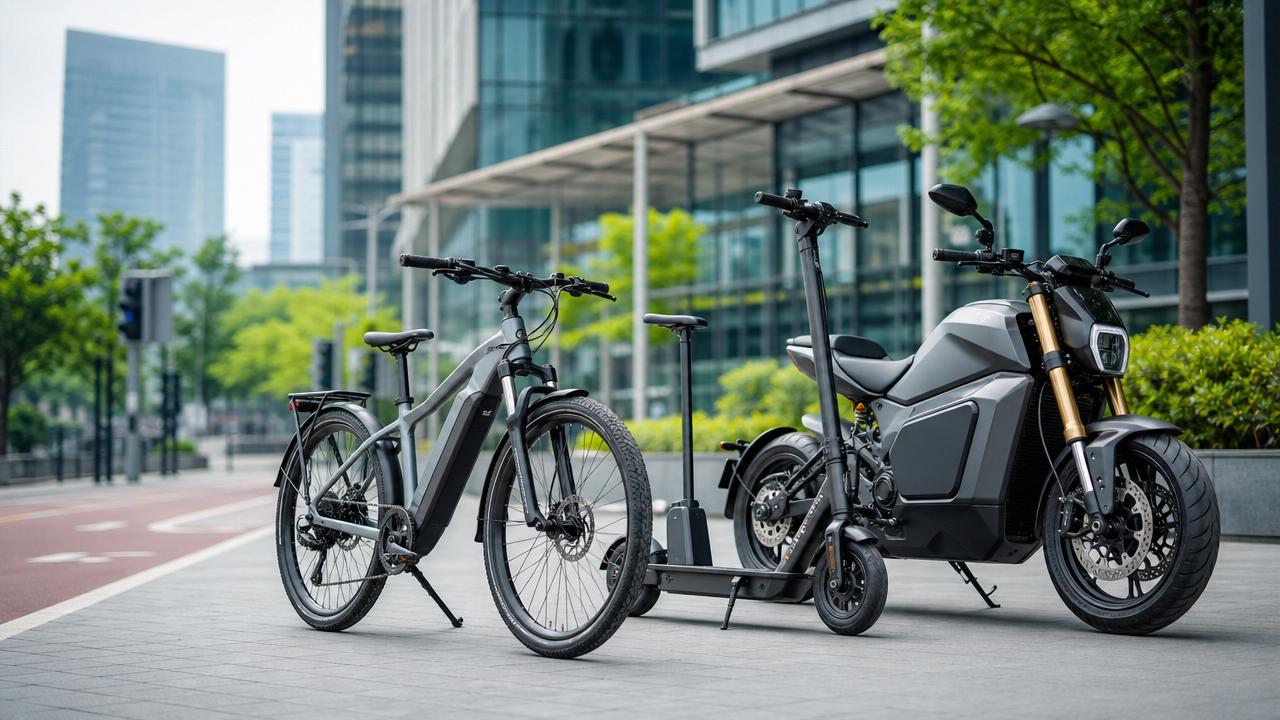
From there, product architecture should be built around clear use-case logic. E-bikes may anchor commuter and cargo segments. Smart e-scooters may support short-hop density zones and intermodal transport. High-speed e-motorcycles may address performance and commercial delivery demand. Advanced drivetrains and lightweight materials then become enabling layers that improve efficiency, differentiation, and brand authority across the portfolio.
Data capability should also be treated as strategic infrastructure. Usage analytics, battery health monitoring, predictive maintenance, anti-theft systems, rider behavior insights, and route intelligence all help companies refine products and optimize service models. In mature urban mobility solutions, hardware value increasingly compounds when paired with software visibility.
Why this shift matters for competitive positioning over the next decade
Urban mobility is becoming a systems market. The next decade will reward companies that understand how regulation, materials science, vehicle engineering, software control, and user behavior interact. This is why the market is moving beyond shared scooters. The opportunity has become too large and too complex to be captured by a single format built around one trip type.
For enterprise decision-makers, this is also a branding moment. Companies that can credibly combine low-carbon mobility value with technical excellence will be better positioned to earn trust from cities, distributors, fleet buyers, and end users. That is especially true in premium and performance-sensitive categories, where component quality and ride experience influence willingness to pay.
The brands that lead will not necessarily be those with the most vehicles on the street today. They will be those that align technology choices, urban use cases, lifecycle economics, and regulatory intelligence into a repeatable operating model.
Conclusion: urban mobility solutions now demand strategic depth
Urban mobility solutions are no longer defined by shared scooters alone. The market is entering a more sophisticated stage shaped by e-bikes, smart e-scooters, high-speed e-motorcycles, advanced drivetrains, and lightweight material innovation. For business leaders, the main implication is clear: future value will come from integrated, use-case-driven ecosystems rather than from chasing a single device trend.
The smartest path forward is to evaluate each segment through business fundamentals: demand quality, operating economics, policy fit, service requirements, and technology differentiation. Companies that do this well can move beyond hype and build stronger positions in the global low-carbon mobility market.
In short, the question is no longer whether urban mobility will diversify. It already has. The strategic challenge now is identifying where your organization can create the most durable advantage as cities, users, and mobility technologies evolve together.
Related News