
IoT Mobility Platforms: What Improves Service Efficiency

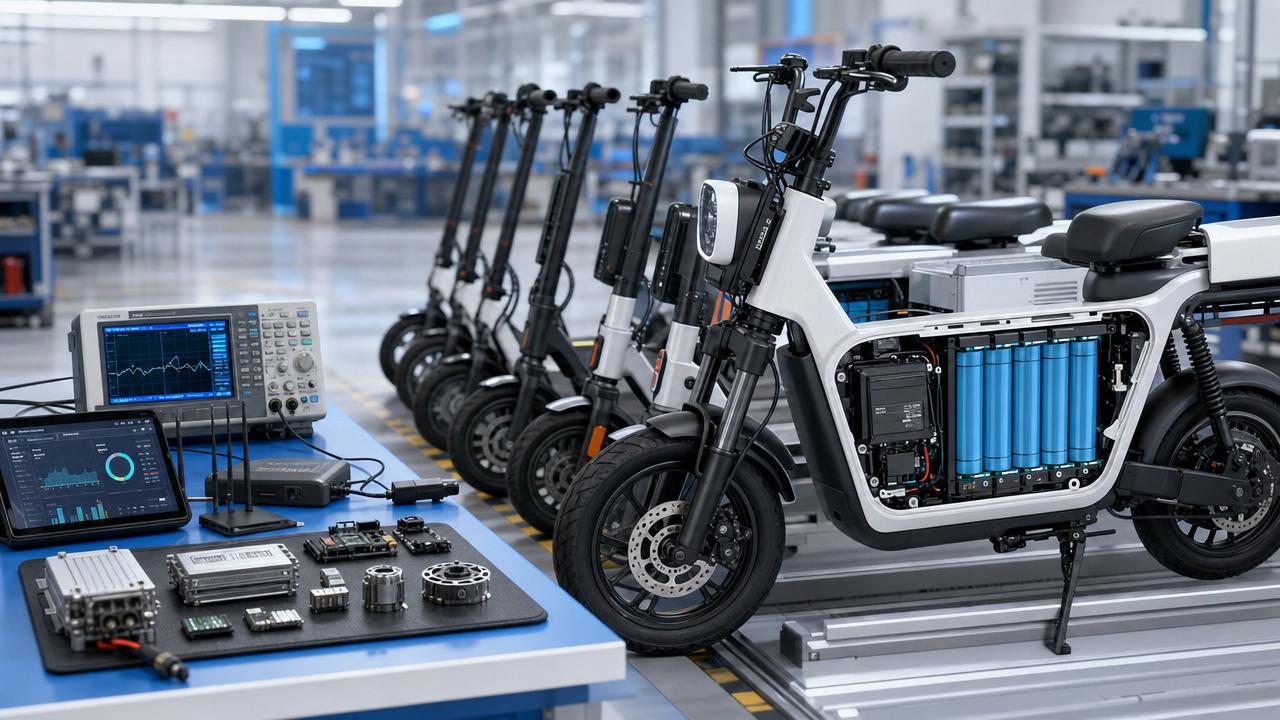
For after-sales maintenance teams, IoT mobility platforms are no longer optional add-ons. They are becoming the operational layer that turns disconnected vehicles, service tickets, battery data, fault codes, and rider reports into usable maintenance decisions. In practical terms, the right platform improves service efficiency by shortening diagnostic time, enabling predictive interventions, reducing repeat repairs, and giving technicians a clearer view of fleet health across e-bikes, e-scooters, and other connected two-wheel systems.
The core search intent behind “IoT Mobility Platforms: What Improves Service Efficiency” is straightforward: maintenance professionals want to know which platform capabilities actually make their work faster, more accurate, and less reactive. They are not looking for broad smart-city theory. They want to understand what functions matter in day-to-day service, what data is truly useful, and how to judge whether an IoT mobility system will reduce downtime rather than create another dashboard to manage.
For after-sales teams working in a fast-moving mobility environment, the answer is clear. Service efficiency improves most when an IoT mobility platform connects vehicle telemetry, fault diagnostics, battery analytics, parts traceability, service workflows, and field alerts in one usable system. The biggest gains come from actionable visibility, not just more data. If a platform helps a technician identify the root cause before a vehicle reaches the workshop, it saves time. If it predicts battery degradation or controller failures before breakdowns happen, it cuts disruption. If it links repair history with component-level behavior, it improves first-time fix rates.
What after-sales maintenance teams actually need from IoT mobility platforms
Maintenance personnel care about service speed, diagnostic accuracy, parts availability, and repeatability of repair outcomes. Their daily pressure is practical: too many vehicles to inspect, too little time to isolate faults, inconsistent rider-reported issues, and growing complexity in electric drivetrains, controllers, sensors, connectivity modules, and battery systems.
That means the most valuable IoT mobility features are not the ones that sound advanced in a product brochure. The most valuable ones are the functions that reduce uncertainty at the moment of service. A useful platform should tell technicians what happened, when it happened, under what riding or charging conditions it happened, and whether the issue is isolated or widespread across a fleet or model family.
In e-bikes, e-scooters, and high-performance electric two-wheelers, many faults are intermittent. A rider may report sudden power loss, weak assist, unstable braking response, overheating, battery drain, or communication failure. Without connected data, the technician often has to reproduce the issue manually, which is slow and unreliable. With a strong IoT mobility platform, service teams can review timestamped events, motor load behavior, battery temperature curves, firmware status, fault logs, charging anomalies, and even geofenced usage patterns before the vehicle is physically inspected.
This is where service efficiency begins: not with automation for its own sake, but with fewer blind spots in the maintenance process.
Faster diagnostics: the first and most visible efficiency gain
The most immediate benefit of IoT mobility in after-sales service is faster diagnostics. In conventional repair workflows, a technician relies on customer descriptions, visual checks, manual testing, and trial replacement of parts. That process is slow, especially when faults involve software, power electronics, battery management systems, or intermittent sensor issues.
An effective platform reduces diagnosis time by collecting vehicle-side data continuously or at defined intervals. Instead of starting from zero, technicians can open a service case with a preloaded fault context. They can see whether the issue is related to controller communication, cell imbalance, motor overheating, regenerative braking inconsistency, derailleur actuator behavior in connected performance bikes, or charging irregularities from third-party chargers.
For example, if a scooter repeatedly enters low-power mode, the root cause may not be the motor at all. It could be a thermal protection trigger, battery voltage sag under load, connector corrosion, firmware mismatch, or repeated riding behavior on high-gradient routes. A platform that correlates fault codes with real usage data helps technicians move directly to the likely source. That shortens workshop queue time and improves first-pass resolution.
For service managers, the value is equally important. When diagnostic time falls, labor utilization improves. Teams can handle more vehicles without lowering service quality. In large fleets or dealer networks, this creates measurable gains in throughput and customer satisfaction.
Predictive maintenance: reducing breakdowns before they create service congestion
Reactive repair is expensive because it concentrates work at the worst possible time: after a failure has already disrupted the user. Predictive maintenance changes that pattern. This is one of the strongest reasons IoT mobility platforms improve service efficiency over time.
Predictive service works when the platform identifies abnormal trends early enough to support intervention before failure. In micro-mobility, that may include battery internal resistance increase, recurring controller temperature spikes, abnormal discharge curves, frequent hard braking events, motor current irregularities, weak communication between modules, or component wear patterns tied to terrain and rider behavior.
For after-sales teams, predictive alerts matter only if they are specific and operationally useful. Generic warnings do not help. A maintenance team needs alerts that indicate urgency, probable cause, affected parts, and recommended action. If the system simply says “battery health issue detected,” the technician still has too much guesswork. But if it says “pack shows accelerated voltage imbalance in cells 4–7 under high-load discharge over the past 12 cycles,” that is actionable.
In practical service operations, predictive maintenance improves efficiency in three ways. First, it smooths workshop demand by shifting some repairs from emergency work to planned service. Second, it reduces secondary damage caused by prolonged operation under fault conditions. Third, it helps teams prepare the right tools and replacement parts before the vehicle arrives.
For brands and fleet operators handling e-bikes, e-scooters, or high-speed electric motorcycles, this matters even more because downtime has both economic and reputational costs. A platform that supports better prediction allows the after-sales function to become more strategic rather than purely reactive.
Battery intelligence is one of the biggest service multipliers
In connected mobility, battery-related issues generate a high share of service complexity. Range complaints, charging failures, thermal warnings, degradation concerns, and sudden shutdowns are all common triggers for after-sales activity. Because batteries are costly and sensitive, misdiagnosis can also be expensive.
This is why strong battery analytics are often one of the most important capabilities in an IoT mobility platform. Maintenance teams need more than state-of-charge visibility. They need deeper battery health indicators such as state of health, temperature history, charging pattern analysis, cycle count quality, cell consistency, voltage deviation, fast-charging stress, and environmental exposure.
When those data points are available in a usable interface, technicians can distinguish between normal aging, misuse, firmware calibration issues, charging infrastructure problems, and real pack defects. That distinction is critical. It prevents unnecessary battery replacements while making legitimate warranty and safety cases easier to validate.
For service efficiency, battery intelligence also improves triage. A remote support team can often determine whether a vehicle should be brought in immediately, monitored remotely, or serviced during the next regular maintenance window. That reduces unnecessary workshop intake and keeps field service focused on higher-priority cases.
In sectors where battery-swapping, shared fleets, or high-utilization rental systems are involved, battery analytics become even more valuable. Teams can rotate assets more intelligently, retire weak packs earlier, and avoid repeated complaints tied to hidden degradation patterns.
Real-time fleet visibility helps maintenance teams prioritize the right work
Not every connected vehicle needs the same maintenance urgency. One of the biggest operational problems in after-sales environments is poor prioritization. Without live visibility, teams may spend too much time on low-impact issues while critical failures spread across active units in the field.
A well-designed IoT mobility platform gives service teams a real-time picture of fleet condition. This includes active fault distribution, regional failure clusters, vehicle utilization patterns, battery exception rates, firmware version spread, and recurring fault trends by model, batch, or component supplier.
That visibility improves service efficiency because it supports better scheduling and resource allocation. If a platform reveals that a firmware bug is affecting a specific production batch of e-scooters, the maintenance response should be different from handling isolated individual cases. If it shows that failures spike after operation in wet conditions, inspection protocols can be adjusted. If it highlights unusual wear in derailleur-linked sensor assemblies on performance e-bikes, technicians can inspect adjacent systems before riders report failures.
Real-time visibility also supports remote service triage. Many issues can be classified before dispatch, reducing unnecessary field visits and improving technician preparedness. In high-volume environments, these small improvements compound quickly.
Service workflow integration matters more than data volume
One common mistake in evaluating IoT mobility platforms is to focus on how much data they collect instead of how well they fit the service workflow. For after-sales teams, a platform creates real value only when telemetry is connected to action.
This means the platform should integrate with ticketing systems, dealer support tools, parts databases, maintenance histories, firmware update records, and technician notes. Data that sits in a separate dashboard is less useful than data that automatically enriches a service case.
For example, when a vehicle is flagged for service, the ideal platform should allow a technician or coordinator to see the unit’s service history, repeated fault codes, installed firmware version, battery replacement record, and recommended inspection sequence in one place. It should also support escalation logic, so unresolved issues can move quickly from field technician to engineering support.
In other words, service efficiency improves when an IoT mobility platform becomes part of the maintenance operating system, not just the reporting layer. The practical question is always this: does the platform reduce steps in diagnosis, approval, repair, and follow-up, or does it add more screens and manual cross-checking?
What features should maintenance teams look for first?
For after-sales personnel evaluating IoT mobility systems, a few capabilities usually matter more than others. The first is reliable fault-code capture with contextual data. A code without context is rarely enough. Teams need operating conditions, timestamps, event sequence, and severity levels.
The second is remote diagnostics. This includes live status checks, historical event replay, and the ability to detect whether a problem is hardware-related, software-related, or user-related before physical inspection. The third is predictive alerting with clear thresholds and maintenance recommendations.
The fourth is battery and powertrain analytics. For electric mobility, these are often the highest-value data sources in after-sales service. The fifth is firmware and configuration management. Many service issues today are tied to software version mismatch, incomplete updates, or parameter misalignment rather than mechanical failure alone.
The sixth is parts traceability and model-specific service intelligence. If a platform can connect field failures to a certain supplier lot, design revision, or production batch, maintenance and quality teams can respond faster and more accurately. Finally, usability matters. A platform that requires too much interpretation may still slow technicians down. Clear dashboards, structured fault hierarchies, and role-based views are essential.
Common barriers that reduce the value of IoT mobility platforms
Not every implementation improves service efficiency. Some platforms fail because they generate too many alerts, offer inconsistent data quality, or lack integration with actual workshop processes. In those cases, technicians may ignore the system or use it only for reporting rather than repair decisions.
Another barrier is poor sensor reliability or incomplete telematics coverage. If the incoming data is inconsistent, maintenance teams lose trust quickly. False positives are especially damaging because they create wasted inspections and alert fatigue. A good IoT mobility strategy requires disciplined validation of sensors, communication stability, and fault classification logic.
Training is another weak point. Even the best platform will underperform if after-sales teams are not trained to interpret the data. Technicians need practical guidance: what a fault pattern means, how telemetry maps to physical inspection, and when remote diagnosis is enough versus when disassembly is required.
There is also an organizational issue. In many mobility businesses, engineering, operations, and after-sales teams use different systems and different definitions of failure. Service efficiency improves most when those teams share data models and feedback loops. Otherwise, insights from the field do not convert into better product updates or service procedures.
How to judge whether a platform will improve your service operation
Maintenance teams should evaluate an IoT mobility platform with operational questions, not marketing claims. How much does it reduce average diagnostic time? Does it improve first-time fix rate? Can it lower no-fault-found cases? Does it identify repeat failures by component or batch? Can it support remote resolution for minor cases? Does it reduce unnecessary battery or controller replacements?
It is also useful to check whether the platform supports measurable maintenance KPIs. These may include mean time to diagnose, mean time to repair, repeat repair rate, downtime per vehicle, preventive intervention rate, warranty claim accuracy, and technician utilization. If the system cannot improve these metrics, its service value may be limited no matter how advanced it sounds.
For organizations in the broader ACMD landscape—especially those involved in premium e-bikes, smart e-scooters, high-speed e-motorcycles, and precision electronic drivetrain systems—the bar should be higher. The platform should not only monitor connected assets, but also help maintenance teams understand interactions between mechanical systems, electronics, software, and material performance under real operating conditions.
Conclusion: the best IoT mobility platforms improve decisions, not just visibility
For after-sales maintenance teams, the most important truth is simple: service efficiency does not improve because a vehicle is connected. It improves when connected data is converted into faster diagnostics, earlier intervention, better prioritization, stronger battery insight, and smoother repair workflows.
That is why the best IoT mobility platforms are not defined by the number of sensors or dashboards they offer. They are defined by how effectively they help technicians find the root cause, prepare the right repair action, avoid repeat failures, and keep vehicles in service with less downtime.
In the connected two-wheel market, where product complexity is rising across e-bikes, e-scooters, and electric motorcycles, after-sales performance is becoming a competitive advantage. Maintenance teams that use IoT mobility well can move from reactive troubleshooting to data-driven service management. And in a market shaped by reliability, uptime, and customer trust, that shift is one of the clearest paths to better operational performance.