
Urban Micro-mobility Business Models Facing Margin Pressure

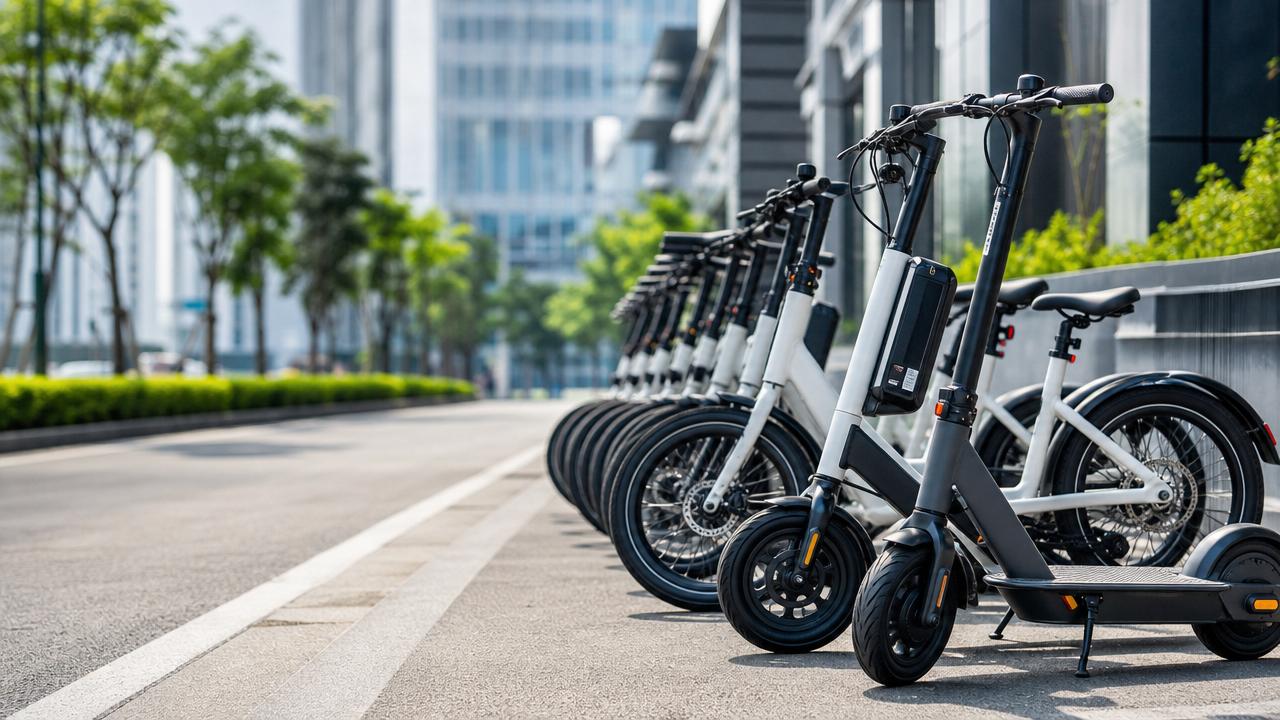
As urban micro-mobility scales across cities, business models built on growth are now colliding with margin pressure, regulation, and rising operating costs. For business evaluators, understanding where value is created—from fleet utilization and battery ecosystems to premium components and lightweight materials—is critical. This article examines how leading players are adapting pricing, partnerships, and technology strategies to protect profitability in an increasingly competitive market.
Why urban micro-mobility margins are tightening faster than expected
The urban micro-mobility sector once attracted capital with a simple promise: scale fleets quickly, win rider adoption, and monetize dense city travel. That growth logic is now under strain. Operators face higher battery replacement costs, insurance premiums, warehouse expenses, labor inflation, and stricter municipal rules on parking, speed, and right-of-way. At the same time, users remain price sensitive, which limits how much of this cost burden can be passed through via fares or subscriptions.
For business assessment teams, the key issue is no longer whether urban micro-mobility has demand. Demand exists in commuting, campus transport, tourism, and delivery support. The real question is whether a company can convert demand into durable unit economics. In practice, profitability depends on a chain of variables: asset durability, fleet uptime, maintenance cycles, battery management, component quality, city permit access, and the ability to segment customers beyond basic low-price rides.
- Shared mobility operators struggle when utilization falls below the threshold needed to absorb fixed costs such as charging depots, redistribution staff, and software infrastructure.
- Vehicle makers face pressure from commodity inputs, warranty exposure, and the need to keep pace with smarter drivetrains, lighter frames, and safer battery systems.
- Platform-led models must justify their take rate as regulators and city partners demand more local accountability, data-sharing, and service reliability.
Margin pressure differs by vehicle category
Not all urban micro-mobility categories experience pressure in the same way. E-bikes usually support better average revenue per trip and stronger commuter retention, but they carry higher theft risk and more expensive drivetrains. Smart e-scooters can scale quickly in dense districts, yet they often face harsh depreciation because of curb abuse and weather exposure. High-speed e-motorcycles can improve revenue potential through premium positioning, but battery-swapping infrastructure and compliance add complexity.
Which urban micro-mobility business models are under the most stress?
Business evaluators should separate top-line growth stories from operating resilience. The table below provides a practical comparison of major urban micro-mobility business models and where margin pressure tends to appear first.
The pattern is clear: urban micro-mobility models with weak control over asset life and local operations are the most vulnerable. Models that combine recurring revenue, reliable service networks, and strong component choices generally defend margin better, even if growth appears slower on the surface.
What many evaluations miss
A common mistake is to review revenue per trip without reviewing revenue per vehicle over its full life cycle. Another is to compare vehicles only on acquisition price. In urban micro-mobility, the cheapest unit often becomes the most expensive unit once field failures, charging inefficiency, and spare-part fragmentation are factored in.
How technology choices influence profitability in urban micro-mobility
Technology is not just a product story; it is a margin story. ACMD’s sector lens is especially relevant here because profitability in urban micro-mobility increasingly depends on the interaction between materials engineering, drivetrain precision, electronics reliability, and battery ecosystem design.
Battery systems and uptime
Battery strategy determines service continuity and operating cost. Swappable battery systems can reduce downtime and improve labor efficiency, but only if logistics are disciplined and thermal management is sound. Poor battery planning increases idle assets, accelerates degradation, and raises safety exposure. Evaluators should look at charging cadence, storage conditions, and compatibility across vehicle generations.
Lightweight materials and total cost of ownership
Aerospace-grade lightweight materials, including advanced carbon fiber applications, can improve range, handling, and user perception. However, the business case depends on use case. In premium commuter e-bikes and performance-oriented urban platforms, lower mass may improve efficiency and brand pricing power. In rough shared-use environments, repairability and impact tolerance may matter more than absolute weight reduction.
Drivetrain precision and maintenance intervals
Precision drivetrain systems affect rider satisfaction and maintenance frequency. Better shifting performance, stronger sealing, and improved anti-interference logic reduce service interruptions. For operators and OEM evaluators, this matters because seemingly minor drivetrain failures can produce disproportionate field-service costs when fleets scale across multiple cities.
What should business evaluators measure before approving an urban micro-mobility investment or supplier?
A disciplined review framework helps separate attractive pitch narratives from durable economics. The following table outlines practical metrics for urban micro-mobility evaluations across procurement, partnership, and expansion decisions.
These metrics matter because urban micro-mobility economics often fail in execution rather than strategy. A company may have strong demand and still underperform if it lacks battery discipline, maintenance planning, or regulatory readiness. That is why intelligence-led evaluation is more useful than surface-level market enthusiasm.
A practical evaluation checklist
- Test whether the model works city by city, not just in blended averages.
- Review component strategy, especially batteries, controllers, braking systems, and high-wear drivetrain parts.
- Check if pricing reflects lifecycle cost or merely launch-stage market share tactics.
- Confirm whether compliance costs are embedded in forecasts rather than treated as future exceptions.
How leading players are protecting margin in urban micro-mobility
The strongest companies are not relying on one lever. They are redesigning the business model around operational efficiency, better segmentation, and more selective technology investment. For evaluators, this means profitability should be tested as a system, not a single ratio.
1. Moving from generic rides to segmented revenue
Operators increasingly bundle commuter passes, university partnerships, tourist packages, and B2B subscription access. This reduces dependence on pure casual-use demand. In urban micro-mobility, more predictable rider cohorts usually support better route planning, lower customer acquisition cost, and improved maintenance scheduling.
2. Standardizing fleets and components
Mixed fleets may look flexible, but excessive variation in batteries, drivetrains, controllers, and structural parts drives up spare inventory and technician complexity. Rationalizing components improves repair speed and procurement leverage. ACMD’s focus on precision transmission and lightweight engineering is useful in this context because component-level choices strongly influence field economics.
3. Building partnerships instead of carrying every cost alone
Margin protection increasingly depends on ecosystem partnerships: battery-swapping networks, local service providers, municipal data interfaces, and OEM collaboration on durability upgrades. Companies that treat urban micro-mobility as an isolated app business often discover too late that physical operations consume the margin they expected software to protect.
Compliance, safety, and certification: where hidden costs emerge
Regulation is no longer a side issue. It shapes margin directly. Safety requirements around battery transport, electrical systems, braking performance, lighting, and rider data handling can alter launch timing and cost structure. Business evaluators should request clarity on applicable regional standards, local operating permits, and after-sales obligations before comparing offers only by purchase price.
- Electrical and battery safety expectations can affect storage, logistics, and insurance cost.
- Vehicle classification rules influence speed, lane access, helmet obligations, and registration requirements.
- Data and geofencing compliance can require system updates, local integrations, and city reporting protocols.
In many urban micro-mobility tenders, the winning proposal is not the lowest bid. It is the one with the fewest downstream compliance surprises. This is especially true in multi-city programs, where rule fragmentation can undermine rollout assumptions.
Common misconceptions business evaluators should avoid
“Higher utilization alone will solve the model”
Utilization matters, but poor asset quality and weak maintenance discipline can erase the benefit. More trips on unreliable hardware may simply accelerate replacement and service costs.
“Premium components always hurt margin”
Not necessarily. In urban micro-mobility, premium components can lower total cost when they extend service intervals, improve rider retention, or reduce downtime. The decision should be based on lifecycle economics, not invoice price alone.
“City expansion automatically creates economies of scale”
Expansion can also multiply complexity. Different labor markets, charging conditions, permit structures, and rider behaviors may weaken scale benefits unless operations are tightly standardized.
FAQ: practical questions about urban micro-mobility margin evaluation
How should I compare urban micro-mobility suppliers when budgets are tight?
Start with total cost of ownership, not purchase price. Review battery replacement assumptions, spare-part commonality, warranty boundaries, software support, and service response commitments. A lower upfront quote can become more expensive if downtime, returns, or compliance fixes are frequent.
Which urban micro-mobility segment usually offers the best margin potential?
There is no universal answer. Shared e-bikes often outperform scooters in rider value and retention, while B2B subscription models can produce steadier cash flow than free-floating consumer fleets. The best margin potential depends on city density, regulatory environment, maintenance capability, and customer mix.
What technical signals indicate a stronger business model?
Look for evidence of battery system discipline, robust braking and controller integration, practical lightweighting rather than cosmetic claims, and drivetrain choices aligned with service needs. Strong technical architecture usually translates into fewer field failures and more predictable cost curves.
How important is regulatory intelligence in urban micro-mobility?
It is critical. Permit caps, parking policies, speed rules, battery storage obligations, and data-sharing requirements can change asset productivity and operating cost quickly. Evaluators who ignore regulatory detail often overestimate scalability.
Why ACMD is a useful intelligence partner for margin-focused decisions
ACMD is positioned at the intersection of micro-mobility strategy, precision drivetrain architecture, and composite material science. That matters because urban micro-mobility profitability is no longer driven by app adoption alone. It depends on how materials, vehicle systems, component reliability, and regulatory conditions combine in the real world.
For business evaluators, ACMD’s advantage is practical intelligence stitching: connecting battery ecosystem logic, electronic shifting reliability, carbon and lightweighting implications, and commercial willingness to pay across global mobility markets. This supports more grounded judgments on supplier fit, category potential, technical trade-offs, and where premium specifications actually protect margin.
Why choose us for your next urban micro-mobility assessment
If you are assessing an urban micro-mobility opportunity, ACMD can support decisions that go beyond surface market narratives. You can consult us on parameter confirmation for e-bikes, smart e-scooters, high-speed e-motorcycles, precision derailleur systems, and lightweight frame strategies. We can also help structure supplier comparisons, identify cost-sensitive component decisions, review delivery-cycle risks, and clarify likely certification or compliance checkpoints for target markets.
For procurement teams, investment reviewers, and partnership evaluators, useful discussion topics include model selection, battery architecture trade-offs, spare-part planning, sample evaluation priorities, customization feasibility, and quotation alignment with lifecycle economics. When margin pressure is rising, the right intelligence can prevent expensive assumptions from entering the plan.
Related News