
Electric Bike Technology Upgrades Worth Tracking This Year

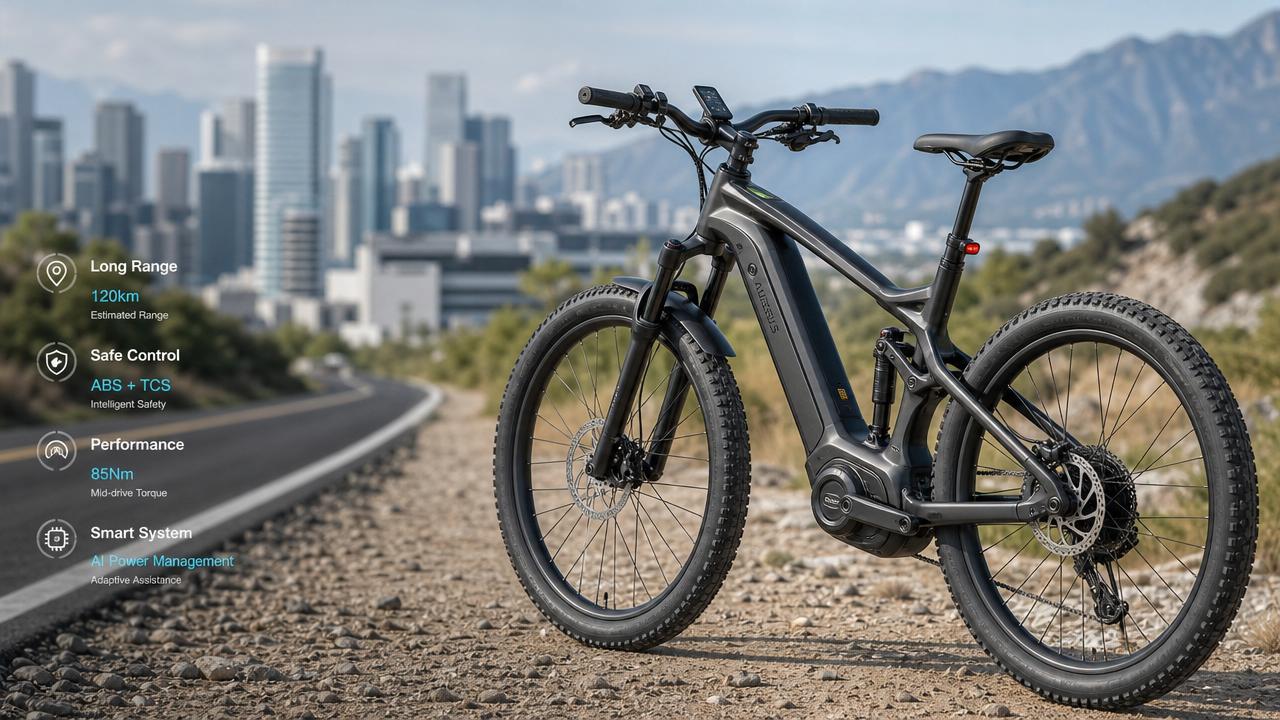
Electric bike technology is moving well beyond simple pedal assist. This year, the most meaningful upgrades are appearing where real-world riding needs are most visible: dense urban commuting, cargo delivery, recreational trail use, and premium performance riding. Smarter drive units, safer battery architectures, connected diagnostics, and lighter structural materials are no longer isolated innovations. They are becoming practical tools for improving rider confidence, extending service life, meeting regulatory expectations, and creating clearer technical differentiation across the mobility market. For intelligence-led platforms such as ACMD, tracking these changes is less about hype and more about identifying which electric bike technology upgrades translate into durable product value.
Why electric bike technology must be judged by riding scenario, not by spec sheet alone
The same electric bike technology can perform very differently depending on use conditions. A commuter e-bike in a wet European city needs predictable low-speed torque, anti-theft connectivity, and compliant lighting integration. A trekking model used for longer mixed-terrain routes benefits more from battery efficiency, thermal stability, and adaptable sensor tuning. A high-load urban cargo platform depends on braking intelligence, frame stiffness, and battery cycle durability under repeated stop-start stress.
That is why this year’s most important upgrades should be evaluated through scenario fit. Instead of asking which motor is strongest or which battery is largest, the better question is which electric bike technology reduces friction in a specific application. This scenario-first approach also aligns with broader industry priorities: compliance, reliability, after-sales cost, software update potential, and long-term component ecosystem support.
In urban commuting, smarter control systems are becoming more valuable than raw power
For everyday city riding, the strongest upgrade trend is the shift from brute assistance to refined control logic. Modern torque sensors are improving cadence interpretation and power delivery smoothness, especially during traffic-light starts, short climbs, and lane merges. Riders increasingly notice how naturally the bike responds, not just how quickly it accelerates. That makes motor tuning, controller response time, and assist modulation central parts of electric bike technology this year.
Integrated connectivity is also moving from a premium extra to a practical expectation. GPS positioning, ride logging, over-the-air firmware updates, and app-based health monitoring now influence purchase decisions because they reduce uncertainty. In cities where theft risk and maintenance downtime matter, connected electric bike technology adds tangible value. Systems that can flag battery anomalies, motor faults, or sensor drift before failure are especially worth tracking.
Another upgrade with strong urban relevance is energy recovery optimization in select systems, although its impact remains limited compared with efficient assist algorithms and lighter rolling assemblies. In stop-and-go traffic, the real gain often comes from smart power management that avoids unnecessary energy spikes rather than headline regenerative claims.
For cargo and utility use, battery safety and load stability are the key electric bike technology upgrades
Cargo and utility e-bikes place electric bike technology under more severe operating stress. Frequent braking, heavy payloads, low-speed balancing, and repeated charging cycles expose weaknesses quickly. In this scenario, battery safety engineering deserves close attention. Better cell packaging, thermal barriers, improved battery management systems, and smarter charge balancing are now among the most commercially significant upgrades.
Load-aware motor control is another development worth following. When a bike carries children, parcels, tools, or food delivery boxes, assistance must remain stable under uneven weight distribution. More advanced controller logic can reduce sudden surges, improve hill-start behavior, and support safer maneuvering in narrow spaces. Paired with stronger hydraulic braking systems and frame designs tuned for torsional stiffness, this makes electric bike technology far more suitable for serious utility work than it was only a few years ago.
Modular battery design also matters here. Swappable or semi-modular packs can reduce downtime and improve fleet usability, but only when connectors, sealing quality, and lock mechanisms are robust enough for repeated daily handling. The market is rewarding systems designed for high-cycle reliability, not just nominal convenience.
On trails and mixed terrain, electric bike technology is advancing through sensor fusion and lightweight materials
Off-road and mixed-terrain riding place different demands on electric bike technology. Here, traction consistency, frame weight, suspension integration, and thermal endurance matter more than commuter-style convenience features. One of the most notable upgrades is sensor fusion, where cadence, torque, speed, and sometimes gradient data are processed together to deliver more intuitive support. This creates smoother power on loose surfaces and reduces the “on-off” feel that can unsettle handling.
Lightweight materials are also becoming a more decisive factor. Carbon fiber structures, refined aluminum hydroforming, and improved component integration help reduce overall mass without sacrificing stiffness. For ACMD’s area of focus, this is where electric bike technology intersects strongly with aerospace-grade lightweighting. A lighter frame does not only improve climbing efficiency; it also changes how the bike corners, how suspension responds, and how manageable it feels when battery charge drops late in a ride.
Motor packaging is part of the equation as well. More compact drive units with lower noise and better heat dissipation allow frame designers to optimize geometry and center of gravity. In practice, that means better balance on technical sections and less fatigue over longer distances.
For premium performance models, the biggest shift is system integration across drivetrain, software, and structure
At the high end of the market, electric bike technology is increasingly defined by how well subsystems work together. It is no longer enough to have a strong motor, advanced derailleur, or lightweight frame independently. Premium value now comes from integrated behavior: how shifting responds under load, how assist is modulated during cadence changes, how the battery communicates with the controller, and how the frame handles the resulting torque paths.
Wireless electronic shifting compatibility is especially relevant in this segment. When paired with motor control software, it can improve cadence stability and reduce drivetrain shock. Although this level of refinement may not be necessary for every use case, it represents an important frontier in electric bike technology because it blends mechanical precision with digital responsiveness. This convergence is highly aligned with ACMD’s broader intelligence view of micro-mobility, precision transmissions, and composite engineering.
How demand differs across major electric bike technology scenarios
The table below shows how the same upgrade trend creates different value depending on riding context.
Practical guidance for matching electric bike technology upgrades to real needs
- Prioritize software quality when urban usage involves frequent stops, traffic variation, and theft exposure.
- Give battery architecture and thermal management more weight than advertised range when evaluating utility-heavy platforms.
- Focus on system weight distribution, not frame weight alone, for trail and trekking applications.
- Check compatibility across motor, drivetrain, and firmware ecosystems before valuing premium performance features.
- Treat diagnostics, updateability, and component serviceability as part of core electric bike technology value, not as optional extras.
Common mistakes when tracking electric bike technology this year
A frequent misjudgment is overemphasizing top-line motor wattage while ignoring ride calibration. In many real scenarios, poor tuning creates more user dissatisfaction than limited peak output. Another mistake is assuming range claims are directly comparable across models without considering rider weight, terrain, assist mode, temperature, and battery aging behavior.
It is also easy to undervalue structural engineering. Frame layup, weld quality, vibration management, and integration around the battery cavity can shape durability and ride feel as much as the electronics do. Finally, connected features should not be judged by app interface alone. The true question is whether the underlying electric bike technology provides useful diagnostics, secure data exchange, and reliable long-term update support.
What to watch next in electric bike technology
The upgrades worth tracking this year point in a clear direction. Electric bike technology is becoming more scenario-specific, more software-defined, and more dependent on deep integration between electronics, drivetrain precision, and lightweight material science. That shift matters across the wider mobility ecosystem because it affects compliance readiness, product positioning, service economics, and user trust.
A practical next step is to map current and planned models against actual use scenarios, then score them by control quality, battery safety, connectivity depth, structural efficiency, and ecosystem compatibility. This makes it easier to distinguish short-term feature noise from upgrades that will shape durable competitive advantage. For anyone following the evolution of electric bike technology through the lens of advanced mobility intelligence, this year is less about a single breakthrough and more about which combinations of upgrades create the best fit for specific riding realities.