
Bicycle Derailleur Components: Key Wear Points to Check

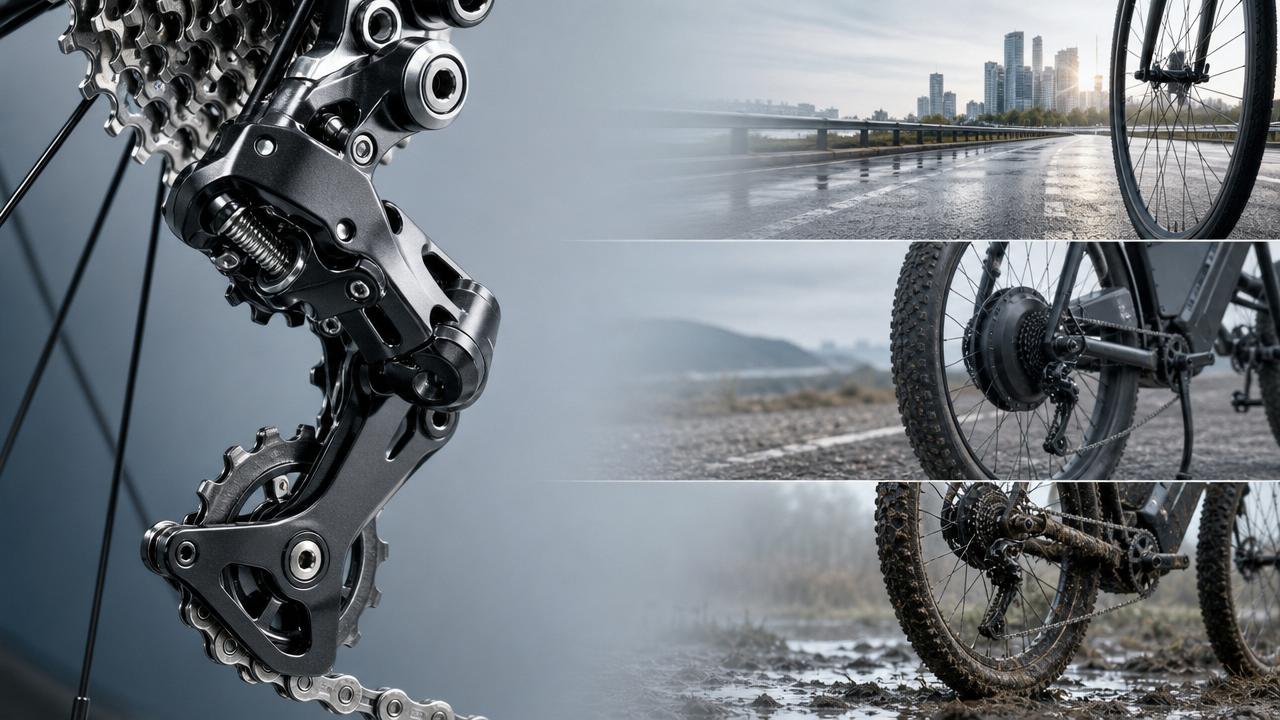
Why Bicycle Derailleur Components Need Scenario-Based Inspection
Bicycle Derailleur Components are among the most wear-sensitive parts in any drivetrain, making regular inspection essential for after-sales maintenance teams.
From pulleys and jockey wheels to springs, pivots, and cages, each contact point affects shifting accuracy, noise control, and service life.
This guide explains how wear develops under different riding and service scenarios, and what to check before failure becomes expensive.
For ACMD, Bicycle Derailleur Components represent a practical intersection of mechanical precision, maintenance economics, and performance consistency.
Inspection becomes more effective when technicians judge wear by use case, not by appearance alone.
How Use Conditions Change Wear Patterns in Bicycle Derailleur Components
Not every drivetrain ages the same way. Urban commuting, cargo riding, wet-weather use, and race settings create different stress signatures.
A derailleur that looks acceptable on a clean bike may already have pivot looseness, pulley tooth wear, or spring fatigue.
Checking Bicycle Derailleur Components by scenario improves diagnosis speed and reduces unnecessary part replacement.
This approach also supports broader mobility service quality, especially where e-bikes and high-mileage fleets demand predictable maintenance intervals.
Key judgment factors before inspection
- Mileage since last drivetrain service
- Chain wear level and lubrication history
- Terrain, weather, and contamination exposure
- Rider load, torque peaks, and shifting frequency
- Mechanical or electronic shifting system type
Scenario 1: Urban Commuting Calls for Fast Checks on Dirt-Driven Wear
City bicycles often face dust, road spray, curb impacts, and frequent stop-start shifting.
In this scenario, Bicycle Derailleur Components usually suffer from contamination first, then misalignment, then accelerated pulley wear.
Technicians should inspect jockey wheels for packed grime, uneven tooth shaping, and side-to-side wobble.
Check pulley bearings or bushings for roughness during hand rotation. Listen for dry clicking or gritty resistance.
Also inspect the derailleur cage for curb strikes, twisted alignment, and rubbing marks near the lower pulley path.
Core judgment points for commuting use
- Pulley teeth sharpened into hooks
- Sticky pivot movement after washing or rain
- Excessive cage play during manual movement
- Delayed downshifts under light pedaling load
Scenario 2: E-Bike and High-Torque Riding Expose Load-Sensitive Wear Points
E-bikes place different stress on Bicycle Derailleur Components because motor torque increases chain tension and shifting shock.
Even with smart control software, repeated loaded shifts can fatigue springs and enlarge pivot clearances faster.
Check return spring force first. A weak spring causes hesitant gear changes and poor chain wrap control.
Next, inspect the cage plates and fastening hardware for spreading, micro-bending, or loosened fasteners.
On high-mileage e-bikes, compare upper pulley tracking against the cassette. Small tracking errors matter more under motor-assisted cadence changes.
Signs that load is the main wear driver
- Repeated skipping under acceleration
- Chain slap despite normal chain length
- Fast pulley wear compared with cassette age
- Spring return weaker than expected after cleaning
Scenario 3: Off-Road and Wet Conditions Demand Closer Inspection of Pivots and Cages
Mud, sand, and water attack Bicycle Derailleur Components at moving joints and exposed fasteners.
In these conditions, wear is often hidden until shifting becomes noisy or chain retention starts to fail.
Focus on pivot points where corrosion, abrasive slurry, and dried contamination increase friction.
Move the derailleur through its travel by hand. Any uneven resistance suggests pivot contamination or internal wear.
Inspect cage alignment from the rear. A small twist can create poor pulley alignment and persistent drivetrain noise.
Also check clutch-equipped systems, where present, because contaminated mechanisms can mimic normal derailleur wear symptoms.
Scenario 4: Performance and Racing Setups Require Precision Checks on Small Deviations
Race-oriented drivetrains often use lightweight materials and tighter tolerances, so minor wear affects shift quality sooner.
For these Bicycle Derailleur Components, inspection should prioritize accuracy rather than visible damage alone.
Examine upper pulley lateral play, hanger alignment interaction, and cage stiffness under hand-applied load.
Electronic systems should also be checked for actuator consistency, because worn mechanical interfaces can appear like software problems.
Millisecond-level shifting depends on friction staying low across all contact points.
High-precision warning signs
- Noise only in selected cogs
- Clean drivetrain but inconsistent indexing
- Upper pulley drift under strong pedaling
- Intermittent hesitation on repeated shifts
How Different Scenarios Change Inspection Priorities
Practical Service Suggestions for Bicycle Derailleur Components
Effective maintenance starts with a repeatable inspection order. This reduces missed wear points and inconsistent service outcomes.
- Clean the derailleur before judging wear.
- Inspect pulley teeth and rotation smoothness.
- Check cage straightness and hardware tightness.
- Test pivot movement across full derailleur travel.
- Evaluate spring return and chain control response.
- Confirm indexing after mechanical wear checks.
For advanced mobility systems, this routine supports reliable service records and longer drivetrain life.
It also aligns with ACMD’s emphasis on precision mechanical transmission intelligence and practical low-carbon mobility efficiency.
Common Misjudgments When Checking Bicycle Derailleur Components
One common mistake is replacing the derailleur before checking chain wear and hanger alignment.
Another mistake is assuming noise always comes from the pulley wheels. Sometimes pivot drag causes the real indexing error.
Visual cleanliness can also mislead. Internally worn Bicycle Derailleur Components may look acceptable after washing.
On electronic systems, technicians sometimes blame firmware when mechanical friction is slowing actuator response.
Ignoring riding context is the biggest error, because identical symptoms may come from different wear sources.
Next Steps for More Reliable Drivetrain Maintenance
To improve service consistency, build an inspection checklist based on real riding scenarios and mileage exposure.
Record pulley wear, pivot feel, spring force behavior, and cage condition at every major drivetrain service.
This makes Bicycle Derailleur Components easier to monitor over time and helps identify repeat failure patterns earlier.
For organizations tracking mobility technology, disciplined component inspection also reveals broader insights about durability, design priorities, and usage trends.
When wear is judged by scenario, maintenance decisions become faster, smarter, and more cost-effective.
Related News