
Lightweight Structural Materials: Trade-Offs in Strength and Cost

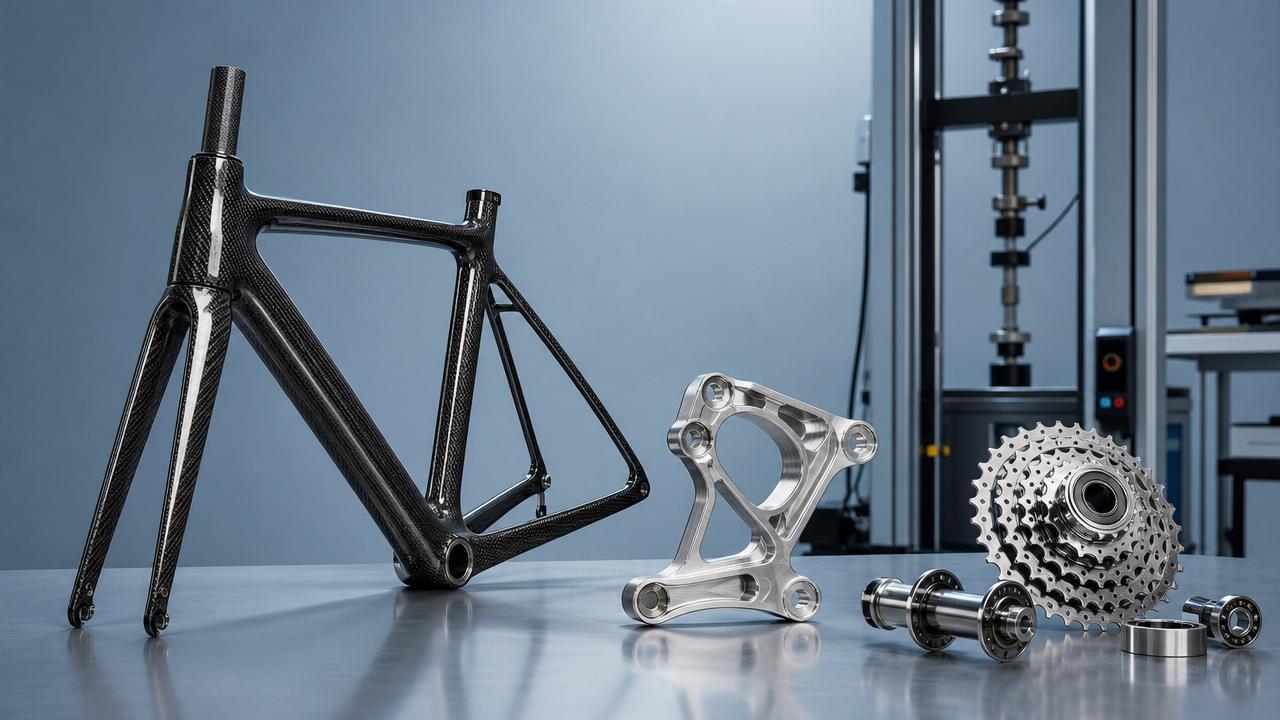
Lightweight structural materials sit at the center of modern mobility design because lower mass changes far more than top-line performance. It affects acceleration, battery range, handling, fatigue behavior, assembly methods, warranty exposure, and supply-chain risk. In sectors tracked closely by ACMD, from carbon fiber frames to precision drivetrain parts and high-speed electric two-wheel platforms, material choice becomes a commercial decision as much as an engineering one.
That is why the trade-off between strength and cost deserves a closer look. A lighter structure is not automatically a better structure. The useful question is whether a material delivers the required stiffness, impact resistance, durability, and manufacturing consistency at a cost the application can sustain over its full lifecycle.
Why lightweighting matters now
Pressure for lightweighting is rising from several directions at once. Electric mobility needs every watt-hour to go further. Premium cycling products compete on ride feel and responsiveness. Urban micro-mobility platforms need durable structures without excessive transport and maintenance costs.
At the same time, regulations, carbon targets, and consumer expectations are becoming more demanding. ACMD’s coverage of e-bikes, e-scooters, e-motorcycles, drivetrain systems, and carbon fiber frames reflects this shift clearly. Designers are no longer chasing low mass alone. They are balancing low mass with repeatable quality, repairability, and global sourcing stability.
In practical terms, lightweight structural materials help reduce inertial loads, improve energy efficiency, and support better mechanical tuning. Yet they may also introduce process sensitivity, inspection complexity, or volatile raw-material pricing. Those trade-offs are what separate a successful platform from an expensive experiment.
What counts as a lightweight structural material
The term usually refers to materials that carry load while reducing overall mass compared with conventional steel-heavy solutions. The category includes aluminum alloys, magnesium alloys, titanium, fiber-reinforced composites, and hybrid structures that combine metals with engineered polymers or carbon laminates.
The key point is structural duty. A housing cover may be light, but it is not necessarily structural. A frame tube, swingarm, wheel component, or derailleur cage is different. It must manage bending, torsion, vibration, impact, and fatigue over repeated service cycles.
This distinction matters because strength is only one metric. Specific strength and specific stiffness often matter more. A material may be strong in absolute terms but inefficient once weight is factored in. Another may be very light but too fragile under impact or too inconsistent in production.
Strength is multidimensional, not a single number
Material datasheets can mislead if they are read too quickly. Tensile strength is useful, but it does not describe the full service environment. For mobility systems, compressive strength, fatigue resistance, notch sensitivity, crash behavior, and stiffness retention under temperature changes may be more decisive.
Carbon fiber composites illustrate this well. They can offer excellent stiffness-to-weight performance and allow directional layups around expected load paths. That is why they remain central to high-end bicycle frames and selected aerospace-grade applications. But they also demand careful control of resin systems, curing conditions, void content, and impact inspection.
Aluminum offers a different balance. It is relatively mature, easier to scale, and often more predictable in production economics. However, its lower modulus compared with steel can require geometry changes to reach target stiffness, and fatigue design must be handled with discipline.
For technical evaluations, the real issue is load case matching. A material that excels in laboratory tension may underperform in a vibration-heavy urban fleet. Another material may look less impressive on paper yet deliver lower failure rates in field conditions.
A practical comparison lens
Cost goes beyond raw material price
A frequent mistake is to compare lightweight structural materials only by kilogram price. That view misses tooling, scrap rates, cycle time, joining methods, labor skill, testing burden, and downstream warranty costs.
Composites can reduce part count through monocoque design, which may offset some material expense. On the other hand, if yield loss is high or rework is limited, total production cost rises quickly. Metals may look heavier, yet their forming and repair ecosystems are often more mature and globally available.
In mobility applications, logistics also matter. A lighter product can lower shipping cost and improve energy efficiency in use. But if it requires narrow supplier qualification or long lead times, the financial picture changes. ACMD’s strategic lens is useful here because market advantage often depends on both technical fit and supply resilience.
Cost questions worth asking early
- Does the material reduce system weight enough to justify tooling and validation cost?
- Can the chosen process hold tolerance and repeatability at target volumes?
- Will joining, bonding, or surface treatment add hidden complexity?
- How difficult is inspection after impact, crash, or long-cycle fatigue exposure?
- What happens to cost if one qualified supplier becomes unavailable?
Where the trade-offs show up in real mobility systems
In e-bikes, frame mass influences range, climbing feel, and handling response. Yet urban use also brings curb strikes, variable rider weight, weather exposure, and maintenance inconsistency. That makes impact tolerance and long-term reliability just as relevant as stiffness.
In smart e-scooters, lightweight structural materials affect portability and fleet efficiency. Still, high-cycle vibration, fold-joint stress, and exposure to abuse can punish overly optimized designs. Here, slightly heavier but more robust structures may produce better total value.
High-speed e-motorcycles face more severe thermal and dynamic loads. Lightweighting supports acceleration and battery efficiency, but the structure must also manage torque spikes, braking loads, and pack integration. Material choices cannot be separated from thermal management and crash architecture.
Precision drivetrain components create another interesting case. Small weight reductions in derailleur cages, crank assemblies, or transmission elements can improve response and premium appeal. Yet these parts also demand wear resistance, dimensional precision, and stable performance under contamination and repeated shifting cycles.
How to judge fit without overvaluing low mass
The most useful evaluations start with the application, not the material trend. A sound review connects target loads, service environment, production volume, expected lifetime, and acceptable failure modes. Only then does a comparison of lightweight structural materials become meaningful.
A balanced assessment usually considers four layers at once: performance, manufacturability, durability, and economics. Weakness in any one layer can cancel the benefit of an impressive mass reduction.
- Match the material to the dominant failure mode, not only the peak load case.
- Check whether stiffness targets require geometry changes that alter assembly design.
- Review inspection methods for fatigue, delamination, corrosion, or crack initiation.
- Model total landed cost, including scrap, tooling refresh, and field-service impact.
- Compare platform-level gains, not isolated component weight savings.
This approach is especially important in premium mobility categories, where lightweight structural materials can strengthen brand value but can also amplify customer expectations. A small design flaw becomes expensive when the product is positioned as high performance.
What the next round of evaluation should include
The market is moving toward integrated decisions rather than isolated material swaps. Advanced layup strategies, hybrid metal-composite assemblies, digital simulation, and more precise testing protocols are making lightweight structural materials more competitive across product tiers.
Even so, the best next step is usually not to chase the lightest option. It is to define the real decision frame: target use case, risk tolerance, expected production scale, supplier depth, and service-life assumptions. Once those are clear, the trade-off between strength and cost becomes easier to quantify.
For organizations following ACMD’s intelligence across two-wheeled mobility and aerospace-grade lightweighting, the strongest decisions come from combining material science with market context. Review the load path, validate the manufacturing route, compare lifecycle cost, and test whether the weight reduction creates measurable system value. That sequence turns lightweighting from a headline claim into a defensible engineering choice.
Related News