
Urban Mobility Solutions: 2026 Business Models to Watch

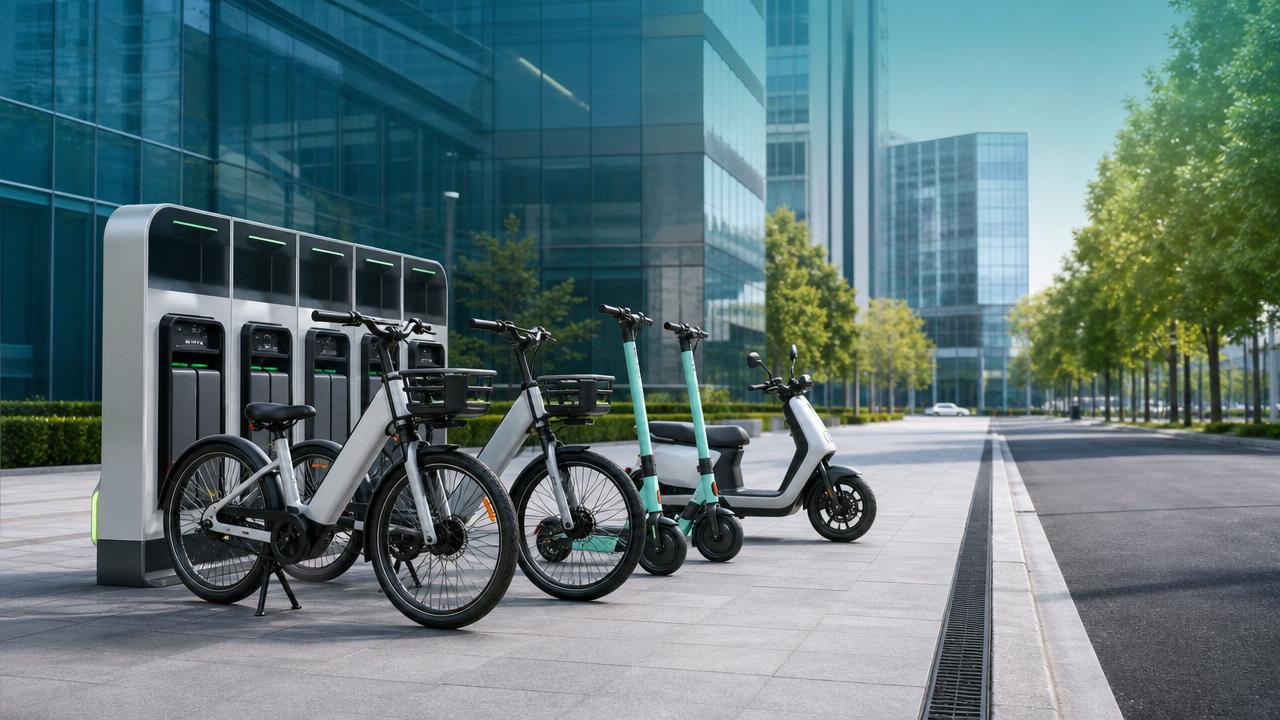
As cities rethink congestion, carbon goals, and last-mile efficiency, urban mobility solutions are becoming a critical lens for business evaluation. In 2026, the most promising models will emerge at the intersection of smart micro-mobility, lightweight engineering, connected infrastructure, and scalable service ecosystems—creating new opportunities for investors, OEMs, and strategic decision-makers seeking sustainable growth.
For business evaluators, the key question is no longer whether urban mobility solutions will grow. It is which business models can convert policy momentum, user demand, and technical capability into durable margins.
The strongest opportunities in 2026 will likely come from models that combine hardware, software, service operations, and regulatory fit. Companies that rely on vehicle sales alone may grow, but those building recurring revenue layers will be better positioned.
This matters especially in micro-mobility, where e-bikes, smart e-scooters, and high-speed electric two-wheelers are moving from product categories into integrated urban systems. The value is increasingly created in fleet intelligence, battery ecosystems, maintenance networks, and data-driven utilization.
For decision-makers, evaluating the market now requires more than tracking demand volume. It requires understanding business model resilience, capital intensity, compliance risk, technology differentiation, and the path from pilot adoption to scaled urban deployment.
What is the real search intent behind “urban mobility solutions” in 2026?
Readers searching this topic are usually not looking for a broad definition. They want to identify which urban mobility solutions are commercially viable, where revenue pools are shifting, and which models deserve strategic attention.
For a business evaluation audience, search intent is practical. They want a market map, a screening framework, and a realistic view of risks. They are asking where growth will come from and what makes it defensible.
That means a useful article should not spend too much time on generic sustainability claims. It should focus on market structure, monetization models, competitive signals, technology enablers, and the metrics that separate attractive operators from hype-driven entrants.
In short, the main intent is decision support. The reader wants to judge business potential, not just understand mobility trends at a conceptual level.
Why 2026 is a turning point for urban mobility business models
Three forces are converging in 2026. First, cities are under pressure to reduce congestion and transport emissions without waiting for large infrastructure projects to deliver relief.
Second, urban users increasingly accept multimodal travel, especially when short-distance movement is seamless, app-enabled, and competitively priced against private car use or underperforming transit links.
Third, the underlying technologies are improving. Better batteries, lighter composite structures, connected vehicle systems, and more reliable electronic control architectures are lowering operating friction across several mobility categories.
These changes make urban mobility solutions more investable than in earlier cycles. Previous enthusiasm often depended on user growth alone. The next phase is more disciplined and built around unit economics, fleet uptime, asset productivity, and compliance readiness.
This is particularly relevant for ACMD-linked sectors. E-bikes, smart e-scooters, high-speed electric motorcycles, advanced drivetrain components, and lightweight carbon-based platforms are no longer isolated niches. They are becoming part of a broader urban mobility value chain.
As a result, business models that connect vehicle performance with urban service efficiency are likely to stand out. Lightweight engineering, software control, and precision transmission systems all affect range, maintenance frequency, safety, and user satisfaction.
Which business models are most worth watching?
The most important shift is from one-time hardware transactions to layered monetization. In 2026, the winning urban mobility solutions will often be companies that use vehicles as the entry point, then build service, software, and infrastructure revenue around them.
1. Fleet-as-a-service for cities, campuses, and enterprise zones
Instead of selling vehicles to end users or municipalities outright, some providers are offering full fleet packages. These include vehicles, charging or swapping support, maintenance, telematics, compliance reporting, and usage analytics.
This model is attractive because it creates recurring revenue and closer customer retention. It also aligns well with organizations that want mobility outcomes without becoming fleet operators themselves.
For evaluators, the key factors are contract duration, utilization assumptions, service coverage density, and the provider’s ability to keep downtime low. Fleet software quality matters as much as vehicle quality.
2. Battery swapping and energy subscription ecosystems
Battery swapping is becoming more credible in dense urban settings, especially for delivery fleets, high-usage scooters, and electric motorcycles. The value proposition is reduced charging downtime and predictable operating cycles.
The strongest model is not simply swap hardware deployment. It is the creation of a network where battery access, energy management, predictive maintenance, and route-level data improve customer efficiency over time.
Business evaluators should examine station density, interoperability, battery ownership structure, replacement economics, and whether the platform can scale beyond a single city or narrow user segment.
3. Premium e-bike ecosystems with service subscriptions
E-bikes remain one of the most promising urban mobility solutions because they address commuting, recreation, and commercial logistics with relatively favorable regulation and broad consumer acceptance.
What changes in 2026 is the business model. Premium brands are increasingly pairing vehicle sales with theft protection, maintenance plans, software unlocks, battery health services, financing, and trade-in programs.
This approach improves lifetime value and reduces dependence on cyclical hardware margins. It also favors players with strong engineering credibility, especially in drivetrains, frame design, weight optimization, and ride reliability.
4. Smart scooter platforms with geofenced compliance layers
Shared scooter models faced criticism in earlier phases because deployment often ran ahead of local policy and operational discipline. The more durable model now is compliance-centric and data-rich.
Operators that integrate geofencing, parking enforcement, rider behavior controls, and municipal data sharing are more likely to secure long-term operating licenses. In this segment, regulatory trust is a commercial asset.
For evaluators, city contract quality, operational maturity, and local rule adaptability may be more important than headline fleet size. Growth without permissioned access is fragile.
5. High-performance electric two-wheelers for urban-professional use cases
High-speed e-motorcycles are not just replacing internal combustion for enthusiasts. In some cities, they are emerging as premium urban tools for commercial riders and time-sensitive professionals.
The business opportunity improves when performance, thermal management, battery architecture, and service support are strong enough to justify higher utilization and premium pricing. This is where ACMD’s focus on engineering depth becomes strategically relevant.
Companies that can combine vehicle capability with serviceability, battery ecosystem support, and low total operating cost may carve out defensible segments beyond early-adopter demand.
What do business evaluators care about most?
Most evaluators are not looking for the biggest market story. They want to know whether a mobility model can survive real-world operating conditions and still generate returns.
That usually means focusing on six questions: Is demand recurring? Are unit economics visible? Is regulation manageable? Can the business scale without excessive capital burn? Is the technology differentiated? Can the operator defend margins?
In urban mobility solutions, this translates into a practical checklist. Review customer acquisition costs, utilization rates, maintenance burden, vehicle lifespan, energy or charging assumptions, and the ratio between software value and physical asset cost.
Also examine city-level dependency. A model that looks strong in one regulatory environment may fail elsewhere. Geographic transferability is a major factor in long-term value creation.
Another key issue is operational complexity. Many mobility companies appear attractive in presentations but struggle in field execution. Battery logistics, spare parts availability, technician networks, and asset recovery all affect outcomes.
Finally, investors and evaluators increasingly care about data quality. Reliable operational data supports pricing, fleet sizing, predictive maintenance, and regulatory reporting. In 2026, data discipline is part of business discipline.
How technology changes the economics of urban mobility solutions
Technology matters not as a feature list, but as an economic lever. Improvements in materials, drivetrains, control systems, and connectivity can directly influence range, uptime, safety, and service cost.
Lightweight materials are a good example. Aerospace-grade carbon fiber and advanced composite design are often associated with performance cycling, but they also shape urban mobility economics where weight affects energy efficiency and handling.
A lighter platform can reduce battery demand, extend useful range, and improve rider experience. In high-use fleets, those gains may compound over thousands of operating cycles.
Precision drivetrain systems also matter. Better transmission efficiency and electronic shifting reliability can improve energy transfer and reduce wear in premium e-bike categories. This supports stronger brand positioning and potentially lower maintenance frequency.
Connected systems are equally important. IoT hardware, telematics, geofencing, diagnostic software, and anti-theft intelligence all create operational visibility. That visibility helps operators reduce loss, improve asset rotation, and react faster to service issues.
For business evaluators, the lesson is simple: technical sophistication should be judged by commercial impact. Ask whether the technology lowers cost, increases utilization, raises switching costs, or improves contract win rates.
What risks could weaken otherwise attractive models?
Urban mobility solutions can look compelling on paper but fail due to execution risk. The first major risk is regulatory fragility. A city can tighten fleet caps, parking rules, speed limits, or licensing terms with little warning.
The second risk is poor unit economics hidden by growth narratives. If a company depends on heavy discounting, frequent vehicle replacement, or unsustainably high service labor, scale may deepen losses instead of improving returns.
Third, technology standardization can become a double-edged sword. It helps adoption, but it may also compress differentiation if hardware becomes interchangeable and customers shift decisions toward price.
Fourth, supply chain volatility still matters. Battery cells, semiconductors, advanced composites, and electronic drivetrain systems can all create bottlenecks. For premium categories, quality consistency is as important as supply continuity.
There is also brand risk. Safety incidents, battery failures, weak after-sales support, or poor parking behavior in public space can damage both operator reputation and category acceptance.
This is why evaluators should favor models with strong governance and operating control, not only fast category growth. In mobility, discipline usually beats expansion theater.
How to evaluate which model fits your strategic priorities
If the goal is stable recurring revenue, fleet-as-a-service and subscription-led e-bike platforms may be strongest. They offer clearer customer relationships and better opportunities to layer software and service value.
If the goal is infrastructure leverage, battery swapping and charging ecosystems may deserve attention. However, they require careful assessment of standardization, location strategy, and capital efficiency.
If the goal is premium engineering differentiation, lightweight frames, advanced drivetrains, and high-performance electric two-wheelers may offer stronger pricing power. These are especially relevant where technical brand prestige shapes purchase decisions.
If the goal is public-sector partnership, compliance-first smart scooter platforms may be more attractive than consumer-led expansion models. In this case, regulatory capability is part of the product.
A useful internal framework is to score opportunities across five dimensions: recurring revenue depth, capital intensity, regulatory dependence, technology defensibility, and cross-market scalability. This creates a more balanced view than demand forecasting alone.
For many strategic buyers and investors, the best opportunities may not be pure-play operators. They may sit in enabling layers such as fleet software, battery intelligence, lightweight component systems, or advanced drivetrain technologies that serve multiple vehicle classes.
Final outlook: where durable value is most likely to emerge
In 2026, urban mobility solutions will not be judged only by environmental relevance or consumer excitement. They will be judged by whether they can create durable value within complex urban systems.
The business models to watch are those that integrate smart vehicles with recurring service revenue, operational intelligence, and regulatory readiness. The market is moving from device sales to system economics.
For business evaluators, that means looking past surface growth and focusing on practical indicators: asset productivity, maintenance structure, technology impact, city compatibility, and monetization depth.
Across e-bikes, smart scooters, electric motorcycles, advanced drivetrain systems, and lightweight materials, the strongest players will likely be those that translate engineering excellence into service reliability and scalable economics.
The urban mobility opportunity is real, but selectivity matters. In the next cycle, the winners are less likely to be the loudest entrants and more likely to be the operators and suppliers that solve friction at scale.
That is the clearest 2026 takeaway: the most investable urban mobility solutions are not just clean or connected. They are commercially disciplined, technically credible, and built for the realities of modern cities.
Related News