
Aerospace-Grade Composites in Lighter Cargo E-Bikes

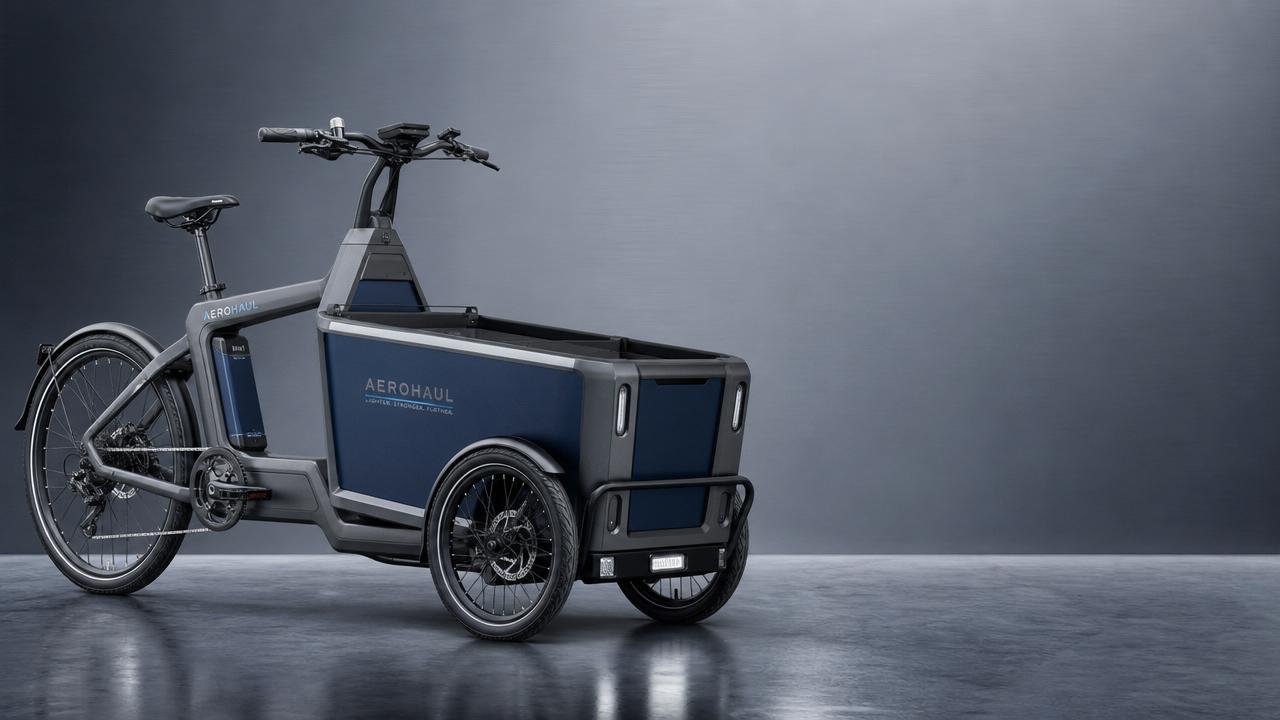
As cargo e-bikes move from niche logistics tools to strategic urban mobility assets, aerospace-grade composites are becoming central to business evaluation. Lighter structures can improve payload efficiency, battery range, and lifecycle performance while supporting premium positioning. For decision-makers, understanding how advanced materials reshape cost, durability, and competitive differentiation is essential to assessing the next wave of high-value cargo e-bike innovation.
Why business evaluators are looking at aerospace-grade composites now
For business evaluators, the core question is not whether advanced materials sound impressive. It is whether they create measurable commercial advantage in cargo e-bikes.
The answer is increasingly yes, but only in specific use cases. Aerospace-grade composites can reduce frame weight, improve stiffness-to-mass ratio, and enable better design integration than metal-heavy architectures.
That matters because cargo e-bikes are under unusual pressure. They must carry goods, survive daily abuse, remain efficient, and still meet urban operators’ demands for range, uptime, and low total cost.
In this context, aerospace-grade composites are no longer just a performance story borrowed from racing bicycles or aircraft programs. They are becoming a business model variable.
When weight drops without sacrificing structural performance, operators can gain practical benefits. These may include longer battery-assisted range, easier handling, lower rider fatigue, and improved payload optimization.
For manufacturers and investors, that translates into a more strategic discussion. The material choice affects margin structure, product segmentation, brand positioning, and long-term competitiveness in premium urban logistics.
What search intent really sits behind this topic
A reader searching for “Aerospace-Grade Composites in Lighter Cargo E-Bikes” is usually not seeking a basic definition of composites. The underlying intent is evaluative and commercial.
They want to know whether aerospace-grade composites are technically credible for cargo platforms, whether the economics can work, and where the strongest return on material innovation may appear.
Business assessment teams also want to separate marketing language from engineering substance. Not all carbon or composite claims deliver meaningful system-level gains in urban cargo applications.
That is why the most useful analysis focuses on decision criteria. These include weight reduction per dollar, structural durability, manufacturability, repair pathways, certification complexity, and downstream customer value.
In short, the search intent is about judgment. Readers want a framework for deciding when aerospace-grade composites are a smart investment, and when they remain an expensive distraction.
Where lighter structures create direct commercial value
The first commercial advantage is system efficiency. In cargo e-bikes, every kilogram saved from the frame can be reallocated to battery, payload, accessories, or rider usability.
That matters especially in dense urban delivery environments. Stop-start operation, frequent acceleration, curb navigation, and route variability all magnify the value of lightweight structural design.
A lighter vehicle generally consumes less energy for the same delivery mission. That can extend range, reduce charging frequency, or allow smaller battery packs in selected duty cycles.
Each outcome has financial value. More range supports route productivity. Smaller batteries reduce bill of materials pressure. Lower energy demand may improve lifecycle efficiency at fleet scale.
The second advantage is ride quality and control. Cargo e-bikes are often ridden by users with different skill levels, under time pressure, and in mixed traffic environments.
Reducing mass while maintaining frame stiffness can improve handling predictability. Better control lowers operational friction and may reduce incidents, training burden, and rider strain over long shifts.
The third value driver is platform differentiation. In competitive procurement, advanced lightweight construction can support a premium narrative, especially when tied to measurable fleet performance.
For brands serving logistics providers, municipalities, or high-end urban mobility partners, aerospace-grade composites can help justify higher pricing if the efficiency story is operationally proven.
Why aerospace-grade composites are different from generic lightweight materials
Not all lightweight materials deliver the same performance logic. Aerospace-grade composites are defined less by image and more by consistency, engineering control, and demanding structural standards.
These materials often combine high-modulus fibers, tightly controlled resin systems, and advanced layup strategies. The result is more precise tuning of stiffness, strength, vibration behavior, and load paths.
For cargo e-bikes, this matters because the load profile is complex. Frames experience repeated dynamic stress from cargo shifts, road shock, braking forces, and torsional demands during turning.
Traditional metal frames can perform very well, but they are often forced into mass tradeoffs. Aerospace-grade composites allow engineers to add material where loads concentrate and remove it elsewhere.
This tailoring ability is one of the strongest reasons evaluators pay attention. The value is not simply “lighter than aluminum” or “premium like carbon fiber.” It is targeted structural optimization.
It also enables part integration. Composite design can combine functions that would otherwise require multiple metal parts, fasteners, or reinforcements, which may simplify certain assemblies.
What business readers should examine beyond weight savings
Weight reduction is the most visible benefit, but it should not dominate the evaluation alone. The smarter question is how composites affect whole-product economics and long-term operating value.
Start with duty-cycle alignment. A lightweight composite cargo e-bike makes more business sense in high-frequency urban use than in low-utilization consumer ownership with modest carrying demands.
Next, examine battery interplay. If frame lightness allows a smaller battery while preserving usable range, the system-level savings may offset part of the higher frame cost.
Then evaluate service model fit. Composite-intensive platforms need credible repair, inspection, and replacement strategies. Without them, procurement teams may view the technology as operationally risky.
Another key factor is regulatory and insurance acceptance. Fleet customers will want confidence that crash behavior, fatigue resistance, and maintenance protocols are clearly documented and manageable.
Finally, assess customer perception carefully. Premium materials can support brand lift, but only if buyers connect them to lower operating costs, higher durability, or better rider outcomes.
The biggest concerns: cost, durability, and repairability
The main objection to aerospace-grade composites in cargo e-bikes is simple: they cost more. Raw materials, tooling, quality control, and skilled production all increase complexity.
For business evaluators, the cost issue should be reframed. The relevant metric is not initial frame cost, but total value contribution over the vehicle’s commercial life.
If a lighter frame extends range, reduces battery size, improves rider productivity, and supports premium contracts, higher upfront cost may be strategically acceptable.
Durability is the second concern. Cargo e-bikes are not pampered sports products. They face impact, weather exposure, overload risk, and repetitive daily use in operational settings.
This means composite design must be application-specific. A material system that works in high-performance bicycles may still fail commercially if it is not engineered for cargo abuse patterns.
Repairability is the third concern and often the deal-breaker. Metal frames are widely understood by service networks. Composite structures require more specialized inspection and restoration methods.
For this reason, the best cargo e-bike programs do not treat repair as an afterthought. They build modularity, replaceable impact zones, and service documentation into the product from the start.
How to judge whether the economics actually work
To evaluate return on investment, business teams should model the e-bike as an integrated mobility asset, not as a collection of expensive components.
Begin with frame mass reduction and estimate its effect on battery demand, rider effort, route efficiency, and payload flexibility across real delivery conditions.
Then compare bill of materials scenarios. A more expensive composite frame may be partially balanced by savings in battery capacity, support structure, or secondary hardware.
Next, calculate fleet-level utilization benefits. If lighter bikes complete more deliveries per charge, reduce downtime, or improve rider retention, the economics can shift meaningfully.
Residual value also deserves attention. A well-engineered composite platform with strong brand recognition may retain premium resale or redeployment value in certain markets.
However, assumptions should remain conservative. If service infrastructure is weak or operator education is limited, the theoretical savings may not convert into realized profit.
A strong evaluation therefore combines engineering evidence, field data, and ownership model analysis. Materials alone do not produce returns; operational integration does.
Best-fit use cases for aerospace-grade composites in cargo e-bikes
Aerospace-grade composites are most compelling where every efficiency gain compounds. Urban commercial delivery fleets are one strong case, especially in congestion-heavy environments.
These operations benefit from lightweight maneuverability, frequent acceleration efficiency, and rider comfort over repetitive daily routes. Small gains become meaningful at scale.
Premium family cargo e-bikes are another viable segment. Buyers in this category often value handling, low effort, aesthetics, and advanced engineering enough to support higher pricing.
Shared mobility or municipal service fleets may also benefit, but only if procurement standards, maintenance pathways, and lifecycle economics are clearly validated.
By contrast, entry-level cargo e-bikes competing mainly on upfront affordability may struggle to absorb composite costs. In those segments, metal remains commercially rational.
The best-fit rule is simple: aerospace-grade composites work best where performance, branding, and operational efficiency together create monetizable value.
What manufacturers and investors should watch in the next phase
The future opportunity lies not only in lighter frames, but in smarter structural systems. Composite cargo e-bikes will increasingly be judged by integrated design performance.
That includes battery enclosure integration, embedded cable routing, sensor-ready structures, vibration tuning, and modular cargo interfaces built directly into the frame architecture.
Manufacturing methods also matter. As production techniques improve, the cost gap between advanced composites and traditional materials may narrow in selected premium segments.
Investors should watch suppliers that combine material science with scalable production discipline. Technical sophistication without repeatable quality rarely creates durable enterprise value.
They should also track standards development. The more clearly testing, repair, and safety frameworks mature, the easier it becomes for composite cargo e-bikes to win broader acceptance.
Finally, market education will be critical. Fleet buyers and procurement officers need evidence-based comparisons, not just aspirational claims about aerospace inspiration.
Bottom line for business evaluation
Aerospace-grade composites in lighter cargo e-bikes are not a universal solution, but they are becoming a serious strategic option in the right market conditions.
The strongest case appears where lightweighting improves more than headline performance. It must influence energy efficiency, usability, service outcomes, and brand economics at the same time.
For business evaluators, the right approach is disciplined rather than speculative. Test whether material innovation creates system-level gains that customers will recognize and pay for.
If the answer is yes, aerospace-grade composites can support meaningful differentiation in a crowded cargo e-bike market. If the answer is no, the premium may remain hard to justify.
The most important insight is this: advanced materials create value only when engineering logic, commercial model, and operating reality are tightly aligned.
Related News