
Urban Cycling Trends Shaping 2026 Commutes

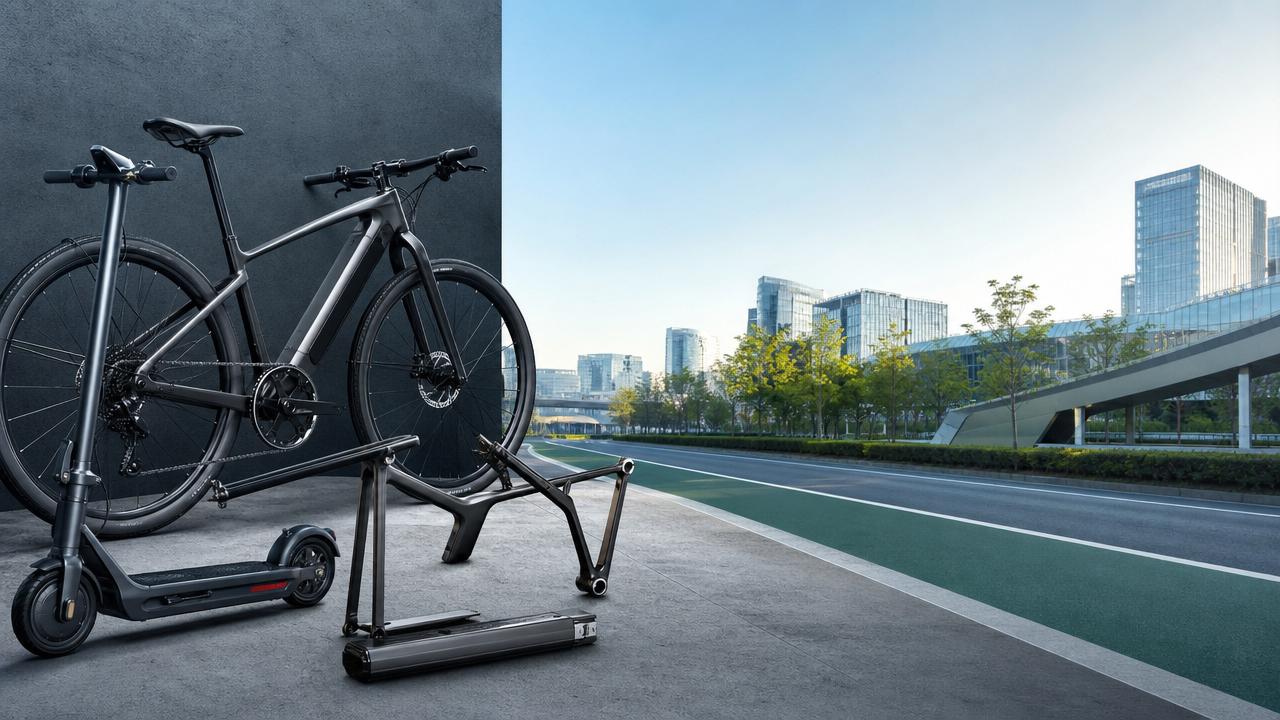
Urban cycling is moving beyond a commuting alternative and becoming a defining force in how cities plan mobility for 2026. From e-bikes and smart e-scooters to lightweight carbon frames and precision drivetrain systems, these trends reveal how technology, policy, and rider demand are reshaping daily travel. For researchers tracking market direction, this overview highlights the innovations and signals set to influence the next era of urban movement.
For B2B researchers, product planners, OEM teams, and mobility strategists, the key question is no longer whether urban cycling will grow, but which technologies, regulatory shifts, and component categories will define scalable demand over the next 12 to 36 months. In 2026, urban cycling will sit at the intersection of infrastructure policy, decarbonization targets, digital fleet management, and rider expectations for lighter, smarter, and more durable vehicles.
This matters directly to the domains ACMD tracks most closely: e-bikes, smart e-scooters, high-speed electric two-wheelers, advanced derailleur systems, and carbon fiber frame engineering. Across these segments, researchers are seeing a common pattern: cities want higher transport efficiency per square meter, users want lower total trip friction, and manufacturers need product architectures that balance weight, power, thermal stability, software integration, and lifecycle cost.
Why Urban Cycling Is Becoming a Core Mobility Layer in 2026
Urban cycling is evolving from a personal transport choice into a city-level mobility layer. In dense districts where average daily trips fall within 3 km to 12 km, bicycles and light electric vehicles solve the efficiency gap between walking, public transit, and private cars. That distance band is especially important because it represents the zone where travel time, parking friction, and congestion costs most often influence modal choice.
The 2026 shift is being accelerated by 4 converging forces: stricter low-emission planning, broader bike-lane investment, battery and drivetrain improvements, and stronger consumer willingness to pay for reliable micro-mobility. For decision-makers, urban cycling is no longer a niche lifestyle category. It is a measurable response to peak-hour congestion, last-mile logistics pressure, and the need to reduce short urban car trips.
The infrastructure signal researchers should watch
When cities redesign 5 km corridors, install secure parking hubs, or connect transit exits with protected cycling lanes, the result is not just more riders. It changes which vehicles perform best. E-bikes gain from longer multimodal commutes, e-scooters benefit from short-distance convenience, and lightweight frames gain importance where users regularly carry vehicles into apartments, offices, or rail stations.
Operational implications for product and market teams
- Vehicles must support mixed-use commuting across 2 to 4 transport modes.
- Component durability must hold under high-frequency stop-start riding, often 5 days per week.
- Design priorities are shifting toward weight, battery efficiency, anti-theft integration, and low-maintenance drivetrains.
- City regulations increasingly shape speed classes, parking design, and fleet deployment rules.
For ACMD’s research scope, this is where mechanical engineering meets urban policy. The brands that win in urban cycling are likely to be those that can translate component innovation into real commuting utility rather than headline specifications alone.
The Technologies Reshaping Urban Cycling Demand
Urban cycling in 2026 is being defined by a cluster of technologies rather than a single product category. E-assist systems, IoT-enabled micromobility, electronic shifting, carbon composite structures, and battery-management improvements are now interacting in ways that directly affect commuting behavior, serviceability, and purchasing priorities.
E-bikes are expanding the practical commute radius
E-bikes remain one of the strongest growth engines in urban cycling because they increase rider range without requiring car-like infrastructure. A typical urban e-bike setup may support 40 km to 90 km per charge depending on assist mode, rider mass, terrain, and temperature. That range makes e-bikes highly relevant for commuters who need reliability across variable topography or who combine work trips with errands and leisure miles.
For B2B evaluation, motor placement, torque delivery, and battery swap or charge workflow matter more than headline power alone. Mid-drive systems often offer better balance and hill performance, while integrated batteries can improve appearance and theft resistance but may complicate service cycles if charging access is limited.
Smart e-scooters are becoming more regulated and more data-driven
Shared and private e-scooters remain important to urban cycling ecosystems, especially in the 1 km to 5 km band. The technology story is now less about novelty and more about fleet intelligence. Geofencing, ride caps, remote diagnostics, and battery-state monitoring are becoming standard operating requirements in many city programs. For operators, these systems can reduce misuse, improve redistribution planning, and support compliance with parking zones and speed-limited areas.
Researchers should also note that software maturity now influences hardware value. A durable chassis with weak diagnostic logic can become more expensive over a 24-month fleet life than a slightly higher-cost unit with stronger telemetry and maintenance forecasting.
Electronic drivetrains and carbon frames are moving into the urban premium segment
Urban cycling has traditionally been associated with rugged, low-complexity designs. That is changing. Precision electronic shifting, sealed drivetrain systems, and lightweight carbon structures are moving from competitive cycling into high-premium commuting and performance-oriented city bikes. The value proposition is not only speed. It includes smoother gear transitions, lower rider fatigue, reduced corrosion exposure, and easier carry weight in buildings with stair access.
A 1.5 kg to 3.0 kg weight reduction at the frame-system level can significantly alter user convenience in real urban conditions. Likewise, millisecond-level electronic shifting response can improve cadence consistency in stop-start traffic, where riders frequently shift 20 to 50 times during a single commute window.
The table below compares how major vehicle and component categories are influencing urban cycling strategies for 2026.
The main takeaway is that urban cycling demand is becoming segmented. Entry-level mobility still depends on affordability, but premium urban mobility increasingly depends on integration: light frames, stable electronics, reliable power systems, and service models that reduce downtime.
What Researchers and Buyers Should Evaluate Before 2026
For information researchers and procurement-facing teams, urban cycling assessment should move beyond surface comparisons. A useful evaluation model should cover at least 4 dimensions: vehicle architecture, operating environment, service complexity, and policy fit. Products that perform well in one city may underperform in another if lane quality, theft risk, gradient, climate, or charging access changes.
Core technical checkpoints
- Weight threshold: below 20 kg is often attractive for lift-and-carry use, while 20 kg to 28 kg may remain acceptable for powered commuting if range gains are meaningful.
- Battery practicality: charge cycles, removable design, and 3 to 6 hour charging windows affect urban usability.
- Drivetrain resilience: sealed or low-maintenance systems reduce service interruptions in wet or polluted environments.
- Thermal and electrical management: especially important for high-demand e-bikes and high-speed electric two-wheelers in summer conditions or steep cities.
Policy and compliance checkpoints
Speed classifications, helmet rules, sidewalk restrictions, fleet permits, and parking obligations can all change product viability. A vehicle that fits one market’s 25 km/h cap may require a different specification set in cities where 20 km/h zones, no-ride geofencing, or battery fire storage rules are enforced more strictly.
Common evaluation mistake
A frequent mistake is focusing on unit purchase cost while ignoring 12-month and 24-month maintenance burden. In urban cycling fleets and premium commuter products alike, connector reliability, parts availability, software update cycles, and frame repair pathways can influence commercial performance as much as initial specification sheets.
The following matrix can help researchers compare procurement and deployment factors across common urban cycling solutions.
This comparison shows that successful urban cycling products are rarely chosen for a single reason. The strongest candidates combine regulatory compatibility, dependable mechanical systems, and a user experience that remains efficient under daily repetition.
Where Advanced Materials and Precision Components Create Strategic Advantage
One of the most important 2026 trends is the migration of high-performance engineering into mainstream urban cycling. This is where ACMD’s focus on carbon fiber frames, advanced transmissions, and electric mobility systems becomes strategically relevant. Lightweighting and precision are no longer isolated to racing or enthusiast categories. They are becoming practical urban differentiators.
Carbon fiber is shifting from prestige to urban utility
In premium commuting, carbon fiber frames can improve the total user experience through lower carry weight, tuned stiffness, and vibration damping. For urban cycling, this matters on broken pavement, curb transitions, and repetitive stop-start riding. The business question is not whether carbon is lighter, but whether the frame design, layup strategy, and durability testing support actual city use rather than only showroom appeal.
Researchers should pay attention to impact tolerance, repair pathways, and integration with fenders, racks, lighting, or internal cable routing. In many urban use cases, a technically advanced frame must support commuting accessories without compromising structural logic.
Precision shifting matters more in traffic than many buyers assume
Electronic or highly refined mechanical derailleur systems can add measurable value in urban cycling because traffic conditions create frequent cadence interruptions. A drivetrain that shifts cleanly under partial load, resists contamination, and reduces adjustment frequency can lower maintenance time and improve rider confidence. In heavy-use conditions, even a 10-minute reduction in monthly service intervention per unit becomes meaningful across larger fleets or dealer service networks.
Questions researchers should ask suppliers
- What is the expected service interval under wet, dusty, or salted-road conditions?
- How does the system handle interference, vibration, and repeated curb impacts?
- Are firmware updates, parts replacement, and diagnostic tools practical for dealers or fleet technicians?
- Does the design improve real commuting efficiency or only top-end performance?
As urban cycling matures, premium component adoption will likely depend on lifecycle value. If advanced materials and precision systems deliver lower rider effort, better uptime, and stronger long-term product positioning, they can justify higher upfront investment in a rational B2B framework.
How to Read the 2026 Urban Cycling Market More Accurately
The urban cycling market should not be read as a single trendline. Researchers should separate at least 3 lanes of demand: mass commuter mobility, managed shared mobility, and premium performance-urban equipment. Each lane responds differently to infrastructure spending, consumer income sensitivity, insurance rules, and service network maturity.
Three signals likely to matter most
- Whether cities continue reallocating road space to protected lanes and parking hubs over the next 2 budget cycles.
- Whether battery safety governance becomes stricter in residential and commercial buildings.
- Whether premium buyers continue valuing lighter, smarter, and more integrated urban cycling products despite broader economic pressure.
For ACMD-aligned intelligence work, the real opportunity lies in connecting component-level signals with city-level outcomes. A new electronic shifting architecture, a lighter carbon frame process, or a more stable thermal design in electric two-wheelers matters most when it solves a specific commuting problem at scale.
Urban cycling in 2026 will be shaped by systems thinking: infrastructure, materials science, digital control, battery workflow, and rider economics. Organizations that understand these linkages will be better positioned to identify durable demand rather than short-lived hype.
For researchers, buyers, and mobility brands, the next step is to evaluate urban cycling through both engineering and market lenses. The strongest opportunities are likely to emerge where low-carbon policy, practical commuting needs, and advanced two-wheel technology align. To explore deeper intelligence on e-bikes, smart micro-mobility, precision drivetrain systems, and lightweight frame innovation, contact ACMD for tailored research support, solution mapping, or product direction analysis.
Related News