
Monocoque Frame Defects That Raise Failure Risk

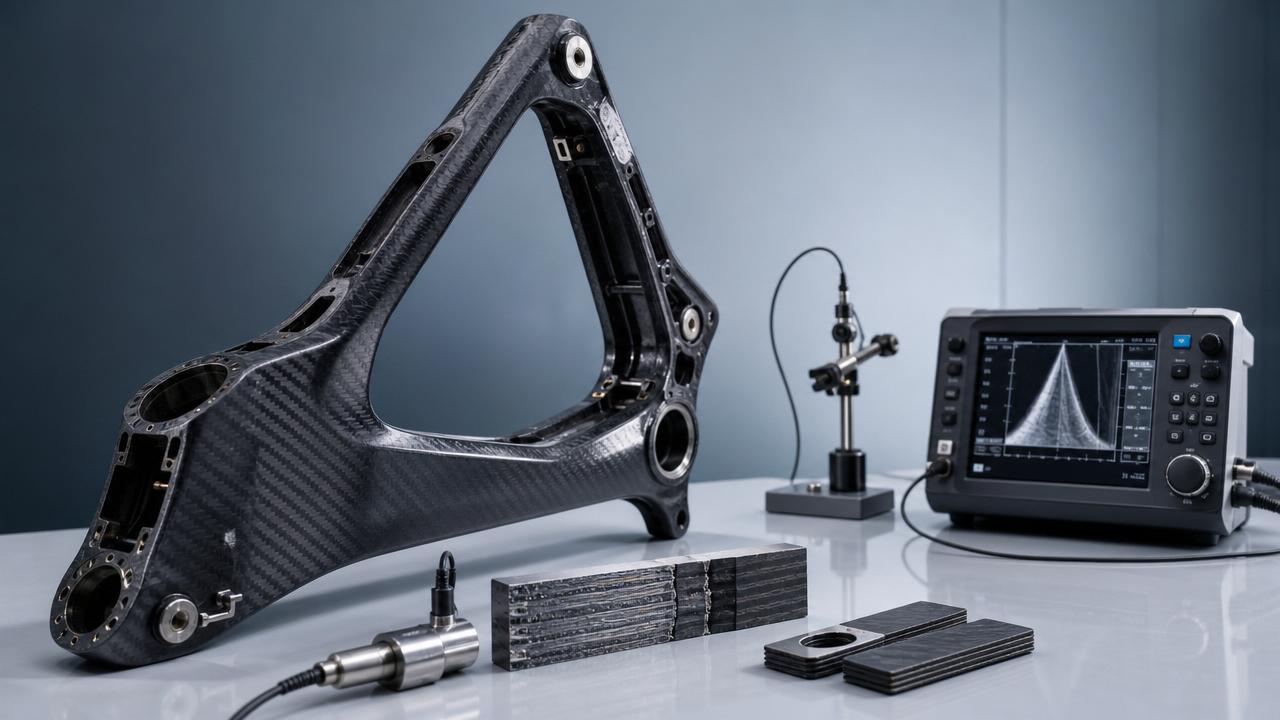
For quality control and safety teams, a monocoque frame is only as reliable as its hidden structure. Small defects in layup, resin distribution, bonding, or curing can sharply increase failure risk under vibration, impact, and long-term load. This article explains the most serious monocoque frame defects, why they appear, and which inspection priorities reduce avoidable safety events.
What makes a monocoque frame especially sensitive to hidden defects?
A monocoque frame carries load through its shell, not through many separate tubes and joints. That design can deliver low weight, high stiffness, and refined aerodynamics.
However, the same integrated shell means local flaws may spread stress into wider areas. A small defect can affect fatigue life, crash behavior, and dimensional stability.
In carbon composite structures, strength depends on fiber direction, resin quality, bond integrity, and cure consistency. A monocoque frame may look perfect outside while hiding internal weakness.
This matters across cycling, e-bikes, performance mobility, and lightweight engineering. In all these fields, a monocoque frame must survive repeated vibration, rider input, road shock, and occasional impact.
- Load paths are continuous, so defect effects can travel farther.
- Thin-wall sections are sensitive to local instability.
- Complex geometry increases layup and compaction difficulty.
- Bonded inserts create mixed-material stress zones.
Because of these factors, defect detection cannot rely only on cosmetic review. Effective control needs process data, destructive validation, and non-destructive inspection.
Which monocoque frame defects raise failure risk the most?
Several defect types repeatedly appear in failure investigations. Not all defects are equally dangerous, but some are strongly linked to early crack growth or sudden structural loss.
1. Voids and porosity
Voids are trapped air pockets or gas gaps within the laminate. They often form from poor vacuum control, volatile release, low compaction, or incorrect resin flow.
In a monocoque frame, voids reduce interlaminar strength and help cracks start under cyclic loading. Their danger rises in bottom bracket, head tube, and suspension transition areas.
2. Delamination
Delamination means layers separate from each other. It may start during manufacturing or after low-energy impact that leaves little visible surface damage.
This defect is critical because a monocoque frame depends on layer cooperation. Once layers separate, stiffness drops and local buckling risk increases quickly.
3. Fiber misalignment and waviness
Carbon fibers must follow intended load directions. Wrinkles, waviness, or off-angle placement sharply reduce compressive strength and fatigue performance.
A monocoque frame often includes tight radii and hollow cavities. Those shapes make accurate layup harder, especially near joints, corners, and internal bladder transitions.
4. Resin-rich and resin-starved zones
Too much resin creates brittle, heavy areas with limited fiber support. Too little resin weakens fiber bonding and reduces shear transfer between plies.
Both conditions can exist in one monocoque frame. Each raises uncertainty in real-world impact and fatigue response.
5. Poor bonding around inserts
Metal inserts, axle mounts, motor interfaces, and bearing seats are common high-risk regions. Weak adhesion here can cause local separation or progressive crack growth.
In e-bikes and high-load platforms, insert defects become more dangerous because motor torque and braking loads amplify stress concentration.
6. Incomplete curing or cure gradient
If temperature, dwell time, or pressure drift outside target range, resin may not fully crosslink. Uneven curing can also occur across thick and thin sections.
An undercured monocoque frame may pass simple handling checks, yet fail early under heat, repeated flex, or environmental exposure.
How do these defects form during manufacturing?
Most serious monocoque frame defects are not random. They usually trace back to a process gap, tooling problem, material variation, or poor handling discipline.
Layup complexity is a major source. When technicians must place many plies inside narrow cavities, bridging and wrinkles become more likely.
Tool wear also matters. Worn molds, release issues, and damaged bladder systems can create inconsistent pressure and uneven laminate compaction.
Material storage errors are another hidden cause. Prepreg exposed to wrong temperature or excessive out-time may lose predictable flow and curing behavior.
Bonding failures often result from contamination. Dust, mold release residue, oil, or moisture can weaken the interface between composite surfaces and inserts.
Cure problems frequently come from uncontrolled thermal distribution. Thick zones, nested parts, or overloaded ovens may produce local undercure or thermal overshoot.
- Incorrect ply orientation or ply drop design
- Insufficient vacuum integrity before curing
- Poor compaction in corners or around inserts
- Inadequate adhesive preparation and surface cleaning
- Inaccurate cure cycle monitoring
For any monocoque frame program, process discipline matters as much as material quality. Premium carbon cannot offset weak execution.
What warning signs should inspection teams prioritize?
Inspection should focus on defect-prone zones and on signs linked to structural consequence. Surface gloss alone is not a reliable indicator of monocoque frame health.
Visual checks remain useful for finding print-through, sink marks, edge lifting, resin pooling, and irregular transitions around bonded hardware.
Tap testing can reveal large delaminated regions. It is fast and inexpensive, but it should never be the only method for critical frame sections.
Ultrasonic testing is valuable for detecting internal discontinuities, especially void clusters and delamination. It offers deeper insight into monocoque frame laminate quality.
Thermography can help screen bond defects and impact damage. X-ray or CT is more powerful, though often reserved for audits, prototypes, or failure analysis.
Inspection priorities should align with actual service load. A monocoque frame for racing, cargo, or electric use will not share identical high-risk zones.
How can failure risk be reduced before field problems appear?
The best prevention strategy combines design control, process control, and inspection feedback. Focusing on one area alone rarely protects a monocoque frame program.
Start with design for manufacturability. Tight corners, abrupt ply terminations, and difficult insert geometries should be simplified whenever possible.
Next, lock down material handling. Prepreg age, freezer history, thaw time, humidity exposure, and adhesive preparation should all be tracked without gaps.
Then verify the cure process using temperature mapping and pressure confirmation. A monocoque frame should not depend on nominal oven settings alone.
- Map critical defect zones from previous failures and simulations.
- Use traveler records for every layup and bonding step.
- Audit bladder, mold, and vacuum tooling at fixed intervals.
- Correlate NDT findings with destructive cut-up samples.
- Separate cosmetic acceptance from structural acceptance criteria.
Field returns should also feed back into production quickly. When one monocoque frame cracks at a recurring location, that event should trigger both design and process review.
What common misconceptions lead to poor decisions?
One common mistake is assuming low weight automatically means advanced quality. A lighter monocoque frame can still contain dangerous voids, weak bonds, or underbuilt local reinforcement.
Another misconception is that visible damage always reflects real damage. Composite structures may hide severe delamination beneath a smooth outer layer.
Some teams also trust pass-fail testing without process understanding. A monocoque frame that survives one static test may still have poor fatigue resistance.
There is also a tendency to isolate defects instead of studying interactions. Fiber waviness plus porosity plus undercure can produce much higher risk than each defect alone.
A safer approach is to treat every monocoque frame as a system. Design intent, process variation, inspection evidence, and service load must be reviewed together.
Conclusion: how should the next inspection or audit be planned?
A monocoque frame delivers major performance benefits, but its reliability depends on invisible structural quality. The highest-risk defects usually involve voids, delamination, fiber misalignment, bond weakness, and incomplete cure.
The practical next step is clear. Rank critical zones, confirm process controls, expand targeted NDT, and compare inspection data with real failure modes.
When a monocoque frame is evaluated through both manufacturing evidence and service risk, safety decisions become faster, more defensible, and far less expensive in the long term.
For advanced mobility programs, that discipline protects not only product integrity, but also brand trust and the broader promise of lightweight engineering.