
IoT Mobility Data That Improves Fleet Uptime

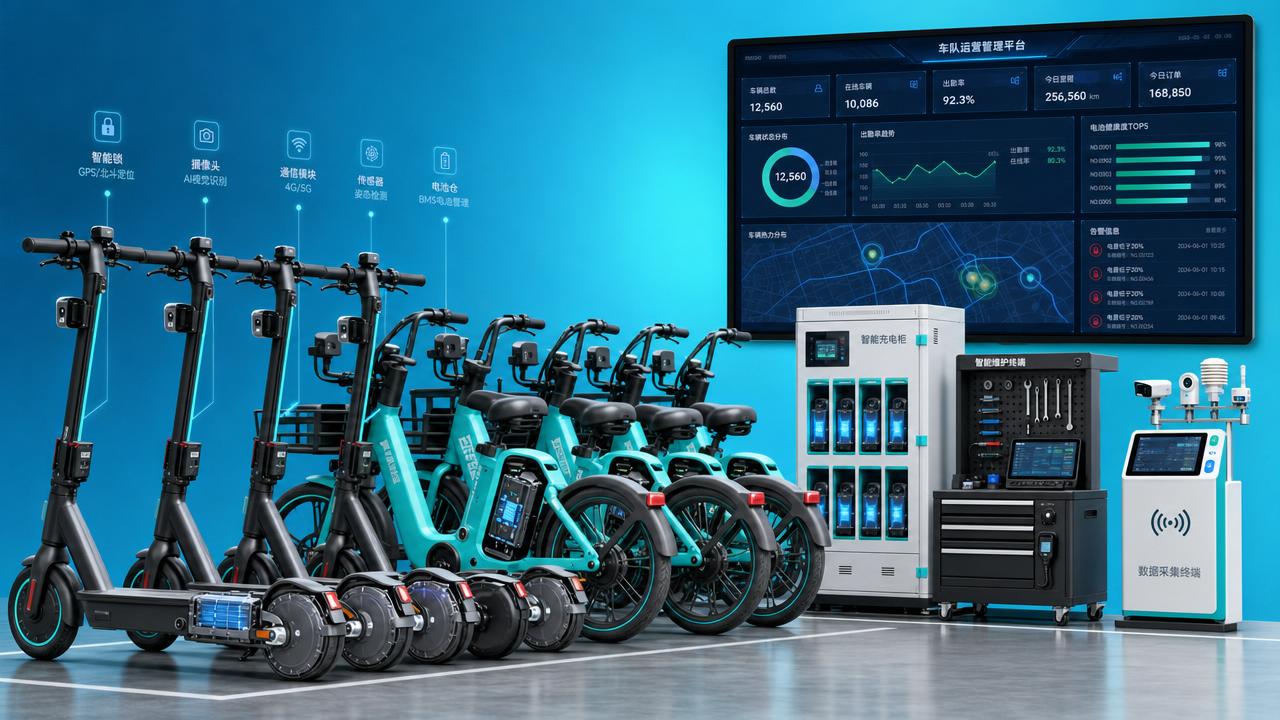
IoT mobility is reshaping fleet management by turning scattered vehicle signals into practical uptime decisions. For project managers and engineering leads, the value is clear: better visibility, faster maintenance action, lower downtime risk, and more reliable fleet performance across fast-moving mobility operations.
That matters most in micro-mobility and connected vehicle programs, where uptime is directly tied to service quality, rider trust, operating margin, and expansion readiness. The real question is no longer whether connected data is useful, but which data points actually improve availability and how teams should act on them.
For most readers searching this topic, the core intent is practical rather than theoretical. They want to understand how IoT mobility data helps keep fleets on the road, what signals matter most, what business value can be measured, and how to avoid investing in dashboards that do not change maintenance outcomes.
Project leaders are typically most concerned with four issues: preventing unplanned downtime, prioritizing maintenance resources, improving battery and component life, and justifying digital investment with measurable operational gains. They also need clarity on implementation risk, integration complexity, and whether the data can support decisions at scale.
The most useful content, therefore, is not a broad overview of IoT. It is a focused explanation of which connected mobility signals improve uptime, how those signals support maintenance and service workflows, what KPIs should be tracked, and where common rollout failures occur.
Why IoT mobility matters when fleet uptime is the real KPI
In fleet operations, uptime is not just a maintenance metric. It is a business capability. When vehicles are unavailable, operators lose rides, delay service commitments, strain field teams, and reduce asset productivity. In high-utilization fleets, even small interruptions can compound into meaningful revenue and customer experience losses.
IoT mobility changes this by creating continuous operational visibility. Instead of waiting for rider complaints, failed inspections, or breakdown events, teams can monitor asset health in near real time. That enables earlier intervention, smarter service scheduling, and better coordination between operations, engineering, and maintenance.
For project managers, this shift is especially important because it supports planning rather than firefighting. Connected vehicle data helps identify failure patterns, map maintenance demand, forecast parts consumption, and align service resources with actual fleet conditions instead of static maintenance calendars.
The result is a move from reactive maintenance to uptime management. That difference is strategic. Reactive maintenance asks what broke. Uptime management asks which assets are most likely to fail, when intervention will have the highest value, and how to preserve availability without overservicing the fleet.
What data actually improves fleet uptime
Not all connected data has equal value. The most useful IoT mobility signals are the ones that support maintenance decisions, service prioritization, and failure prevention. For engineering and project teams, the goal is to focus on signals that can trigger action rather than simply populate a dashboard.
Battery health data is one of the highest-value categories. State of charge, charge cycles, temperature anomalies, voltage imbalance, and degradation trends all affect whether an e-bike, e-scooter, or e-motorcycle remains deployable. Weak battery visibility often leads to avoidable downtime, stranded vehicles, and premature replacement costs.
Powertrain and drivetrain signals are also critical. Motor efficiency, controller behavior, torque irregularities, and transmission performance can reveal issues before they become visible failures. In premium two-wheeled fleets, where performance consistency matters, these signals help protect both uptime and rider experience.
Location and movement data matter for more than tracking. Utilization rates, route intensity, road surface exposure, hill frequency, idle time, and geofenced operating behavior all help explain why some assets degrade faster than others. This context improves maintenance planning and helps teams compare usage-driven wear across operating zones.
Fault codes and event logs remain essential, but they are more powerful when combined with operational context. A brake alert, thermal event, or connectivity interruption means more when linked to rider behavior, weather exposure, charging patterns, and recent service history.
Environmental and structural signals can add another layer of value. Vibration patterns, shock exposure, moisture ingress indicators, and repeated load stress are particularly relevant in fleets using lightweight materials or high-performance frames, where durability and performance must be balanced carefully.
How connected mobility data supports better maintenance decisions
The strongest fleets do not collect data for its own sake. They use IoT mobility insights to answer a simple operational question: which intervention will prevent the most downtime at the lowest practical cost? That requires turning raw telemetry into maintenance logic.
Condition-based maintenance is the first major advantage. Instead of servicing every vehicle at the same interval, teams can trigger inspection or replacement based on actual wear and operating conditions. This reduces unnecessary service work while catching at-risk assets before failure.
Predictive maintenance is the next step. When historical failure records are paired with live telemetry, patterns emerge. Specific temperature ranges, discharge behaviors, controller errors, or vibration signatures may precede breakdowns. Teams can then prioritize vehicles that show early warning signals and reduce field failures.
IoT mobility also improves triage. In a large fleet, maintenance capacity is always constrained. Real-time health scoring helps decide which vehicles need immediate intervention, which can wait, and which should be removed from service. This prevents low-priority tasks from consuming technician time while critical issues spread.
Another benefit is more accurate root-cause analysis. If a vehicle repeatedly fails, connected data can show whether the issue is battery-related, usage-related, environmental, or tied to component quality. That helps engineering teams solve the right problem instead of repeatedly treating symptoms.
For project leaders, this means maintenance becomes a cross-functional process. Operations teams gain a clearer dispatch view, engineering gets better reliability insights, procurement can plan parts demand more accurately, and management can measure whether service interventions are improving actual uptime.
Which fleet KPI improvements should decision-makers expect
Readers evaluating IoT mobility for fleet uptime usually want measurable outcomes, not general promises. The most important KPIs are vehicle availability, mean time between failures, mean time to repair, battery replacement rate, technician productivity, and percentage of maintenance events that are planned rather than reactive.
Availability is the headline metric because it reflects whether the fleet is operational when needed. If connected data helps detect issues earlier, route service more efficiently, or reduce repeat failures, availability should improve directly. That gain often has immediate commercial value in rental, sharing, or managed fleet models.
Mean time between failures shows whether assets are becoming more reliable over time. If maintenance is better targeted and recurring failure causes are addressed, this metric should rise. It is especially useful for comparing asset classes, suppliers, or operating regions.
Mean time to repair can also improve when technicians receive better diagnostics before reaching the vehicle. Knowing probable failure mode, battery condition, or recent event history reduces inspection time and lowers the chance of multiple site visits for the same issue.
Battery-related KPIs deserve separate attention because battery downtime is often one of the biggest availability constraints in electric fleets. Tracking abnormal degradation, balancing behavior, charging efficiency, and temperature stress can reduce surprise failures and improve replacement timing.
Project managers should also monitor service productivity metrics such as jobs completed per technician, first-time fix rate, and spare parts forecast accuracy. These show whether the IoT mobility program is improving workflows, not just expanding data volume.
What project managers should evaluate before investing
Many connected fleet initiatives underperform because buyers focus on device connectivity and dashboard features instead of uptime use cases. Before investing, project managers should define which downtime problems matter most, which data signals can address them, and which teams will act on the resulting insights.
A useful starting point is to map the top causes of fleet unavailability. These may include battery failures, charging issues, brake wear, motor controller faults, vandalism exposure, harsh usage patterns, or delayed field maintenance. Once those causes are clear, data requirements become much easier to define.
Integration is another major factor. IoT mobility data only creates value when it connects with maintenance systems, service ticket workflows, parts inventory, field operations tools, and reporting platforms. If telemetry sits in an isolated portal, decision speed stays low and workflow adoption suffers.
Data quality must be examined early. Inconsistent timestamps, sensor gaps, duplicate vehicle identities, weak fault categorization, and poor battery labeling can undermine the entire program. Engineering leads should establish data governance standards before scaling analytics or automation.
It is also important to consider alert design. Too many alerts create fatigue; too few allow failures to slip through. The right approach is to define thresholds based on actual service impact and continuously refine them using failure outcomes and technician feedback.
Finally, project sponsors should evaluate vendor support for customization, API access, reliability modeling, and long-term device management. Fleets evolve quickly, and rigid platforms often become obstacles once operators need new service logic, new asset classes, or new regional workflows.
Common rollout mistakes that reduce the value of IoT mobility
One common mistake is treating every data point as equally useful. Large telemetry volumes can create false confidence, but uptime gains come from a narrow set of action-oriented signals tied to clear workflows. More data is not the same as better decisions.
Another mistake is failing to involve maintenance teams early. If service technicians and operations coordinators do not trust the alerts or cannot act on them easily, adoption will stall. The best programs are built with field input, not only executive sponsorship or IT ownership.
Some organizations also expect predictive maintenance too early. Prediction works best when fleets have enough historical failure data, consistent service records, and stable asset definitions. Without that foundation, simpler condition-based logic often delivers faster value.
Battery analytics is another area where assumptions cause problems. State of charge alone does not represent battery health. Teams need deeper visibility into thermal stress, voltage consistency, aging behavior, and charging history if they want battery data to improve uptime meaningfully.
There is also a tendency to ignore operating context. A vehicle used on steep terrain, rough pavement, or high-temperature routes should not be evaluated the same way as one used under lighter conditions. IoT mobility is most valuable when technical signals are interpreted through real operating environments.
Where IoT mobility creates the strongest advantage in micro-mobility fleets
In micro-mobility, uptime pressure is particularly intense because fleets often run at high density, face variable rider behavior, and operate under strict service expectations. This makes connected data especially valuable for e-bikes, e-scooters, and high-speed electric two-wheelers.
For shared e-scooter fleets, IoT mobility helps identify underperforming batteries, misuse patterns, geofence-related stress, and vehicles that need retrieval before they fail in the field. That reduces customer complaints and lowers the operational burden of recovery teams.
In e-bike fleets, data can improve both availability and component longevity. Battery health, motor strain, terrain exposure, and braking behavior all influence service timing. Operators can use these signals to reduce premature replacements while keeping reliable assets in circulation longer.
For high-performance electric motorcycles, the stakes are even higher. Thermal management, controller integrity, power delivery consistency, and battery reliability all affect safety and service readiness. Here, IoT mobility supports not only uptime but also engineering feedback loops for product refinement.
Across all these categories, the strategic benefit is the same: more precise maintenance, better asset utilization, and stronger operational confidence. In markets where reliability and service responsiveness define brand reputation, that advantage can become difficult for competitors to match.
A practical framework for turning data into uptime gains
Teams that succeed usually follow a phased approach. First, identify the top three to five drivers of downtime. Second, select the smallest set of IoT mobility signals that can detect or explain those issues. Third, connect those signals to maintenance actions and ownership rules.
Next, build a health scoring model that reflects actual operational priorities. For example, battery anomalies may carry higher urgency than cosmetic damage, while repeated controller faults may trigger immediate inspection. The point is to rank service need according to uptime impact.
Then, define a review cycle. Monthly analysis should compare alert performance, failure outcomes, repair times, and technician feedback. If certain alerts do not prevent failure or create unnecessary work, adjust the logic. Continuous refinement is what turns connected data into an operating advantage.
Finally, report outcomes in business terms. Senior stakeholders need to see how IoT mobility affects availability, service cost, battery life, and fleet productivity. When reporting stays tied to technical telemetry alone, program support often weakens over time.
Conclusion
IoT mobility improves fleet uptime when it is used as a decision system, not just a visibility layer. The most valuable programs focus on actionable vehicle health data, maintenance prioritization, battery reliability, and workflow integration that reduces unplanned downtime.
For project managers and engineering leaders, the opportunity is significant but practical. Start with real failure modes, connect the right signals to service actions, and measure results through availability, repair efficiency, and asset life. Done well, connected mobility data becomes a direct driver of reliability, resilience, and fleet performance.
Related News