
IoT Mobility Trends Shaping Urban Transport in 2026

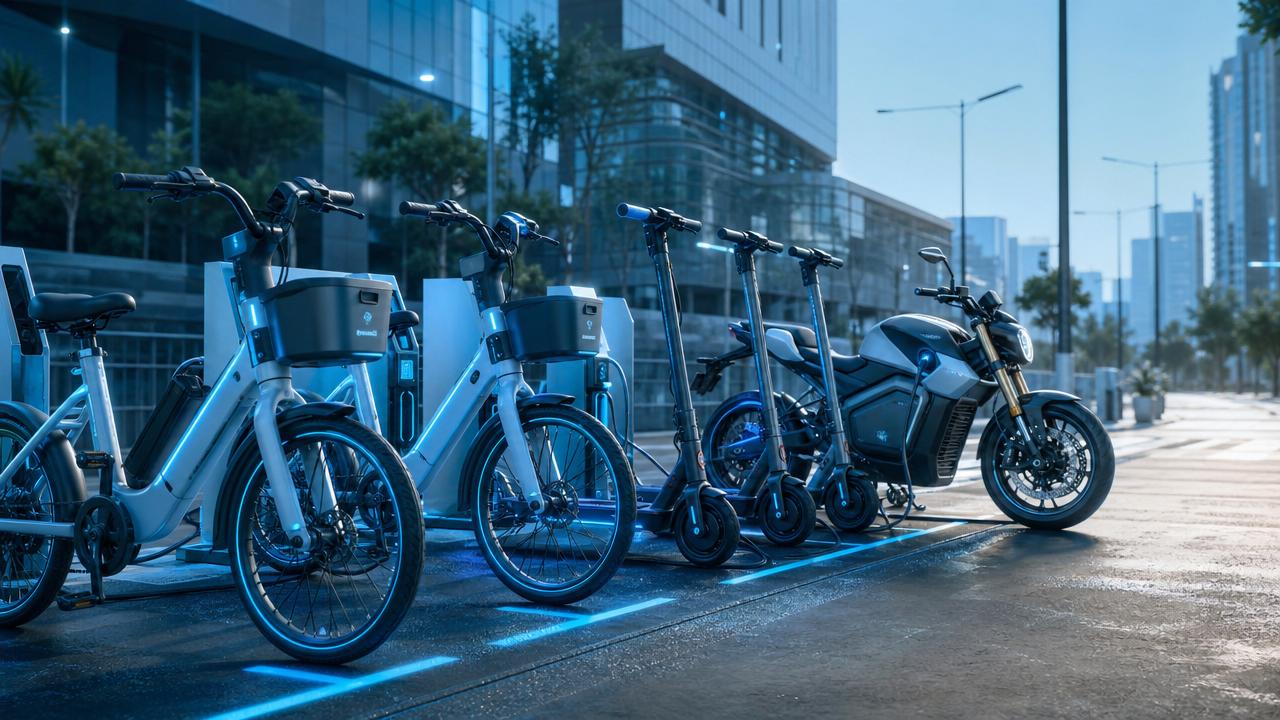
IoT mobility is rapidly redefining how cities move people, goods, and data in 2026. For business decision-makers, the shift goes beyond connected vehicles to smarter fleets, tighter infrastructure integration, and measurable gains in efficiency, safety, and sustainability. This article explores the urban transport trends, technologies, and strategic signals that matter most for organizations planning resilient, low-carbon mobility growth.
For operators, manufacturers, and investors in micro-mobility, the commercial question is no longer whether connected transport will expand, but which systems can scale with acceptable risk, manageable cost, and clear regulatory alignment. In dense cities, decisions around e-bikes, smart e-scooters, battery networks, electronic drivetrain intelligence, and lightweight material platforms now influence utilization rates, service uptime, and public acceptance.
For ACMD’s audience, IoT mobility also sits at the intersection of hardware performance and digital orchestration. A connected e-bike fleet, for example, is only as strong as its powertrain efficiency, sensor reliability, frame durability, and backend analytics. In 2026, competitive advantage increasingly comes from integrating these layers into one operating model rather than optimizing them in isolation.
Why IoT Mobility Has Become a Strategic Urban Transport Priority
Urban transport in 2026 is shaped by three parallel pressures: congestion reduction, decarbonization targets, and the need for more flexible short-distance movement. In many cities, trips under 10 km account for a large share of daily journeys, making connected two-wheeled transport one of the most practical deployment categories.
IoT mobility matters because it turns vehicles into data assets. Sensors, telematics modules, wireless controllers, and cloud dashboards can report battery state, route compliance, vibration patterns, component wear, and theft alerts at intervals as short as 5–30 seconds. That visibility supports faster maintenance decisions and more predictable operating costs.
From Asset Ownership to Intelligent Fleet Operations
Traditional fleet logic focused on purchase price and replacement cycles. The 2026 model emphasizes lifecycle intelligence: uptime percentage, charge efficiency, failure prediction, spare parts availability, and software update control. A fleet with a lower upfront cost can still underperform if battery swap timing, geofencing enforcement, or drivetrain diagnostics are weak.
For enterprise buyers, the most relevant KPI set usually includes 6 metrics: utilization rate, average revenue per vehicle, mean time between failures, charge-to-deployment turnaround, maintenance cost per kilometer, and incident response time. These are the numbers that convert IoT mobility from a technology trend into an investment case.
Why Micro-Mobility Infrastructure Is Expanding Faster Than Legacy Models
Compared with large public transport infrastructure, connected micro-mobility systems can be deployed in phases of 3–6 months rather than multi-year construction cycles. Cities and private operators can start with 500 to 2,000 vehicles, test parking zones, tune geofencing rules, and adjust based on real trip data.
This modularity is especially important for e-bikes, smart e-scooters, and high-speed electric motorcycles used in delivery, patrol, and premium commuter services. Lightweight carbon fiber structures, efficient motors, and increasingly sophisticated drivetrain electronics reduce energy consumption while improving handling in stop-and-go urban environments.
Core decision signals for 2026
- Battery ecosystem maturity, including swap or fast-charge readiness within 20–60 minutes
- Vehicle connectivity reliability in high-density urban corridors and underground parking zones
- Regulatory interoperability across speed classes, parking rules, and right-of-way restrictions
- Component resilience, especially electronic shifting systems, controllers, brakes, and frame interfaces
- Data governance capacity for fleet, rider, service, and infrastructure integration
The Technologies Defining IoT Mobility in 2026
The market is moving beyond simple GPS tracking. The leading IoT mobility platforms in 2026 combine vehicle sensors, battery telemetry, geofencing logic, app connectivity, firmware control, and maintenance analytics into one operating stack. The technical depth of that stack increasingly determines commercial scalability.
Connected E-Bikes and Smart E-Scooters
In short-distance urban transport, e-bikes and e-scooters remain the most flexible categories. Their value comes from high trip turnover, lower space occupancy, and simpler deployment than four-wheel fleets. Typical connected features now include remote lock control, battery health tracking, ride mode management, anti-tamper alerts, and location reporting with 1–5 meter accuracy in open urban conditions.
For operators, durability is becoming as important as intelligence. Vehicles must withstand frequent starts, curb impacts, and weather exposure across 12–18 month heavy-duty cycles. This is where ACMD’s focus on precision mechanical transmission and lightweight structures becomes commercially relevant: drivetrain smoothness, frame stiffness, and vibration control directly affect sensor integrity and maintenance frequency.
Electronic Drivetrain Intelligence and Millisecond Response
Bicycle derailleur systems are evolving from purely mechanical assemblies into connected performance modules. In premium urban and sport-oriented mobility platforms, wireless electronic shifting can respond in milliseconds, helping maintain cadence efficiency across changing gradients and traffic conditions. That matters for commuter comfort, battery optimization, and high-frequency fleet use.
When these systems are linked to diagnostics, service teams can detect shift lag, signal interference, or alignment deviation before riders report a fault. Even a small tolerance issue of ±0.5 mm at the drivetrain interface can cascade into noise, wear, and reduced riding efficiency over thousands of kilometers.
High-Speed Electric Motorcycles and Battery Network Logic
High-speed e-motorcycles are expanding in professional urban use cases such as courier fleets, emergency response support, corporate mobility pools, and premium commuter subscriptions. Here, IoT mobility depends on more than vehicle tracking. It requires thermal management monitoring, battery balancing visibility, swap station integration, and torque delivery control under variable load conditions.
A common operating threshold for professional fleets is maintaining battery health and service readiness across daily ranges of 60–150 km. Systems that cannot support real-time battery diagnostics, fault alerts, or charging queue optimization often create hidden downtime and poor dispatch reliability.
The table below compares how key IoT mobility technologies contribute to urban transport performance across major two-wheel categories.
The key takeaway is that IoT mobility value differs by vehicle class. E-scooters benefit most from control and compliance logic, e-bikes from efficiency and user experience optimization, and e-motorcycles from energy orchestration and heavy-duty operational visibility.
How Lightweight Engineering Strengthens Connected Urban Transport
A common procurement mistake is treating connectivity as a software layer disconnected from vehicle architecture. In reality, IoT mobility performance is strongly influenced by mechanical design. Frame stiffness, vibration damping, cable routing, battery enclosure tolerance, and heat distribution all affect sensor accuracy, controller reliability, and long-term operating stability.
Carbon Fiber Frames and System Efficiency
Carbon fiber frames are no longer relevant only to racing. In premium urban mobility and high-performance e-bikes, aerospace-grade lightweighting helps reduce overall vehicle mass while preserving lateral stiffness and aerodynamic efficiency. Depending on application and layup strategy, weight reduction can influence acceleration response, rider fatigue, and energy use per kilometer.
For connected fleets, lower mass can also improve battery utilization and handling consistency. That said, business buyers should not treat “lighter” as automatically better. The critical issue is balancing impact tolerance, reparability, and structural consistency under repeated urban use, especially when vehicles face potholes, docking stress, and variable payloads.
Mechanical Precision as a Data Reliability Issue
Electronic systems produce better decisions when the underlying mechanics are stable. A poorly aligned drivetrain, flexible mounting point, or inconsistent fork geometry can generate sensor noise and false service triggers. In city fleets operating 7 days a week, these hidden mechanical issues can inflate support tickets and distort performance dashboards.
This is why ACMD’s lens on precision transmission, composite materials, and mobility analytics matters. In high-usage connected vehicles, the line between mechanical craftsmanship and digital performance has effectively disappeared. Procurement teams should evaluate the integrated system, not only the app interface or dashboard features.
Engineering checkpoints for connected two-wheel platforms
- Verify frame and mounting stability for sensor and controller installation.
- Check battery enclosure sealing and heat dissipation under repeated charge cycles.
- Review drivetrain response consistency across urban stop-start conditions.
- Assess wireless signal resilience near dense metal structures and shared parking hubs.
- Confirm spare parts and service intervals for at least 12 months of active fleet use.
Procurement Criteria for Enterprise Decision-Makers
Selecting an IoT mobility solution in 2026 requires more than comparing hardware specifications. Decision-makers need a structured model that covers technical suitability, commercial resilience, service readiness, and policy fit. The strongest proposals usually align operational goals with a 3-layer evaluation: vehicle platform, digital stack, and local deployment conditions.
The 4 Evaluation Dimensions That Matter Most
First, assess operating fit: speed class, trip distance, terrain, weather, and rider profile. Second, assess system integrity: connectivity uptime, firmware governance, and data access rights. Third, assess serviceability: maintenance cycle, parts lead time, and technician training requirements. Fourth, assess compliance: parking rules, geofencing obligations, and battery handling regulations.
In practice, enterprise buyers often shortlist 2–4 vendors, run a 60–90 day pilot, and compare utilization, fault rates, and user feedback before scaling. This phased approach is especially useful in mixed fleets combining e-bikes, scooters, and electric motorcycles across different districts.
The following table can be used as a practical screening tool during supplier evaluation and pilot planning.
A good supplier discussion should move beyond generic claims like “smart” or “efficient.” Buyers need precise answers on intervals, tolerances, maintenance windows, and integration ownership. Those details usually determine whether a pilot becomes a scalable fleet program.
Red Flags During Vendor Selection
- Telemetry exists, but the buyer cannot export data or connect it to internal systems.
- Battery monitoring is available, but no thermal exception workflow is defined.
- Vehicles perform well in demos, but service parts lead time exceeds 30 days.
- Geofencing is marketed aggressively, yet local regulation mapping remains manual.
- Lightweight materials are highlighted, but no fatigue-use scenario is discussed.
Implementation Roadmap: From Pilot to Scaled Urban Deployment
Most organizations should not scale IoT mobility in one step. A staged rollout reduces policy friction, financial exposure, and operational blind spots. A practical model is to move through 3 phases: pilot validation, controlled expansion, and network optimization.
Phase 1: Pilot Validation
Begin with one or two districts, a defined rider segment, and measurable service goals. A pilot lasting 8–12 weeks is often enough to test charging cycles, parking compliance, fault frequency, and rider adoption. This phase should also confirm whether the city environment causes GPS drift, signal interruptions, or unexpected drivetrain wear.
Phase 2: Controlled Expansion
Once baseline performance is stable, expand in clusters rather than citywide. Add vehicles in batches, train maintenance teams, and standardize service checklists. If the fleet includes premium e-bikes or electronic shifting models, technician readiness becomes critical because software issues and mechanical calibration may need coordinated resolution.
Phase 3: Network Optimization
At scale, the focus shifts from deployment to optimization. Operators should refine battery allocation, dynamic parking control, predictive maintenance, and route balancing. Mature IoT mobility programs often review performance weekly, analyze component replacement patterns monthly, and reassess fleet mix every 2–3 quarters.
Common implementation mistakes
- Launching too many vehicle types before service workflows are standardized.
- Ignoring mechanical quality while overinvesting in app features.
- Using geofencing without localized rule updates and parking education.
- Measuring deployment volume but not uptime, turnaround, or safety events.
Strategic Outlook for 2026 and Beyond
The next phase of IoT mobility will be defined by integration depth. Urban transport systems will increasingly connect vehicles, batteries, parking infrastructure, traffic controls, and service data. That trend will reward companies that can combine robust hardware, precision engineering, and actionable intelligence rather than treating them as separate domains.
For ACMD-aligned sectors, the opportunity is especially strong in the overlap between micro-mobility and advanced performance engineering. Smart e-bikes, connected scooters, high-speed electric motorcycles, electronic derailleur systems, and lightweight composite frames are no longer niche technologies. They are becoming operational building blocks for low-carbon urban circulation.
Decision-makers who act early should focus on measurable architecture: reliable telemetry, serviceable components, durable lightweight platforms, and deployment models that fit local regulation. Those who wait for perfect policy clarity may miss the learning curve that defines the winners in connected transport markets.
What business leaders should do next
Review your current mobility portfolio against 4 questions: Which trips can shift to connected two-wheel modes, where are your biggest uptime losses, which components create recurring service friction, and how much operational data is actually usable for decision-making? The answers will clarify whether your next investment should prioritize fleet expansion, component upgrade, battery strategy, or digital integration.
If your organization is evaluating IoT mobility for urban transport, now is the right time to compare vehicle classes, connectivity depth, and engineering quality in one framework. To explore tailored intelligence, sourcing direction, or strategic product analysis across e-bikes, smart e-scooters, electric motorcycles, precision drivetrains, and lightweight materials, contact ACMD to get a customized solution and learn more about the mobility pathways best suited to your market.
Related News